Biologic Chemistry
Life Science
Life Science
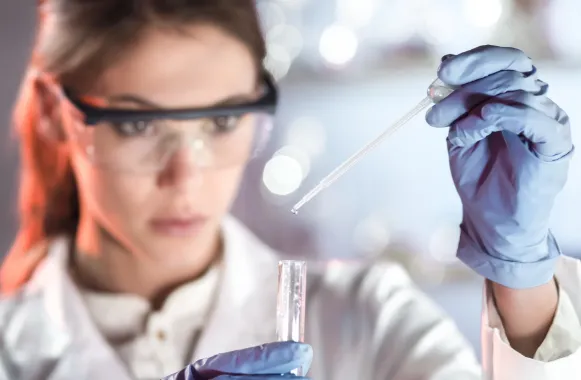
Life Sciences encompass a wide range of disciplines, including biology, biochemistry, and biotechnology. In these fields, water quality is critical for various applications such as cell culture, molecular biology, and protein purification. High-purity water is essential to ensure the success of experiments, maintain cell viability, and obtain reliable results in life science research.
What Is The Impact Of Water In Life Sciences?
Water quality directly influences the outcomes of experiments in life sciences. Impurities in water can impact cell cultures, affect the quality of DNA/RNA, and introduce variability in biochemical analyses, compromising the reliability of results and the overall success of life science experiments.
What Types Of Contaminants In Water Can Affect Life Science Experiments?
Water impurities that can impact life science experiments include:

Bacteria & Microorganisms
Impact:
Bacterial contamination can compromise the purity of biological samples.
Effect:
In cell culture experiments, unintended microorganisms may alter cell growth and function, leading to inconsistencies in experimental conditions and compromising the reliability of life sciences studies.

Endotoxins
Impact:
Endotoxins can affect cell viability and function in life sciences experiments.
Effect:
In molecular biology experiments, endotoxins may stimulate adverse cellular responses, leading to inaccuracies in DNA or protein studies and compromising the reliability of results.

Ionic Contaminants
Impact:
High levels of ions can interfere with life sciences experiments.
Effect:
Excess ions may disrupt biological reactions, affecting the reliability and accuracy of results. In enzyme assays, for example, interference from ions can lead to deviations from expected reaction rates and compromise the validity of experimental outcomes.

Water Measurement Requirements for Life Sciences
Life Sciences encompass a wide range of applications, including molecular biology, cell culture, and various analytical techniques. The quality of water used in life sciences is critical to ensure the integrity of biological samples and the accuracy of analytical results. For life sciences applications, maintaining high purity standards with apyrogenic, Type I ultrapure water is often recommended.
Water Quality Standards According to Industry Guidelines:
To mitigate the challenges associated with water contamination as detailed earlier, the College of American Pathologists (CAP), the globally recognized accrediting body for clinical laboratories in the USA, advocates adherence to the Clinical Laboratory Reagent Water (CLRW) standard set by the Clinical and Laboratory Standards Institute (CLSI) as a baseline requirement. Furthermore, instrument feed water should meet the specifications provided by the instrument manufacturer, which might impose more stringent criteria than CLRW standards, ensuring precision and reproducibility of results.
CLRW/CLSI Specifications:
The CLRW resistivity specification, exceeding 10 MΩ-cm, effectively limits ionic impurity concentrations to parts per billion (ppb) levels or lower, necessitating the elimination of carbon dioxide. While this is suitable for most clinical applications, instances requiring trace element determination demand even higher resistivity, reaching 18.2 MΩ-cm. Although CLRW relies on 0.2 μm filters to remove particulates, this may prove insufficient for the extremely low liquid volumes utilized in contemporary clinical assays.
The Total Organic Carbon (TOC) specification of <500 ppb in CLRW, while aligned with earlier standards, may still permit the presence of diverse organic compounds, including carboxylic acids and polyaromatics, posing a potential risk to low-volume assays. Addressing bacterial contamination is equally crucial, as it profoundly impacts analyzer operations, necessitating consistently low contamination levels to prevent biofilm formation and ongoing issues.
Water supplies designated for clinical biochemistry must undergo validation to ensure suitability for their intended purpose. The CLSI emphasizes rigorous trending of water system parameters, underscoring the importance of continuous monitoring to achieve and sustain water purity.
Adhering to these water quality standards is crucial for the success of life science experiments. Type I water is recommended for critical applications, while Type II water may be suitable for routine experiments.
NOTES:
If removal of finer particulates (< 0.05 micron) is required, consider upgrading to CLS-5400 series systems.
System
Label
System Depth (in)
System Height (in)
System Width (in)
Dry Weight (lbs)
Inlet Connection
System Voltage
TOC Monitoring
0.05μ Ultrafiltration
Ultraviolet Oxidation
Effluent Purity
Effluent
Microorganisms
Effluent Sodium
Effluent Chlorides
Effluent TOC
System Maximum
Output (lpm)
Volumetric Presets
Mounting
Laboratory Applications
CAtegory
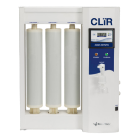

CLR 3300 High Purity Lab Water System with 0.05 Micron Ultrafiltration
10
25.25
21
32
⅜" O.D. Tubing
120V/60Hz
> 18 MΩ/cm
< 10 CFU / ml
< 1ppb
< 1ppb
< 15 ppb
4
Countertop, Wall Mount
Cell Culture, Electrophoresis, Immunochemistry, Life Sciences, Microbiology
Biologic Chemistry
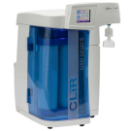
CLïR 5300 Ultrapure Lab Water System with Ultrafiltration (Remote 120v)
14.4
21.6
14.7
42
⅜" O.D. Tubing
120V/60Hz
> 18 MΩ/cm
< 1 CFU/ml
< 1ppb
< 1ppb
< 15 ppb
2
Wall Mount, Remote Dispense
Cell Culture, Electrophoresis, Immunochemistry, Life Sciences, Microbiology
Biologic Chemistry
CLïR 5300 Ultrapure Lab Water System with Ultrafiltration (Remote 220v)
14.4
21.6
14.7
42
⅜" O.D. Tubing
220V/50Hz
> 18 MΩ/cm
< 1 CFU/ml
< 1ppb
< 1ppb
< 15 ppb
2
Wall Mount, Remote Dispense
Cell Culture, Electrophoresis, Immunochemistry, Life Sciences, Microbiology
Biologic Chemistry
CLïR 5300 Ultrapure Lab Water System with Ultrafiltration (Standard 120v)
14.4
21.6
14.7
42
⅜" O.D. Tubing
120V/60Hz
> 18 MΩ/cm
< 1 CFU/ml
< 1ppb
< 1ppb
< 15 ppb
2
Countertop
Cell Culture, Electrophoresis, Immunochemistry, Life Sciences, Microbiology
Biologic Chemistry
System
Label
System Depth (in)
System Height (in)
System Width (in)
Dry Weight (lbs)
Inlet Connection
System Voltage
TOC Monitoring
0.05μ Ultrafiltration
Ultraviolet Oxydation
Effluent Purity
Effluent Microorganisms
Effluent Sodium
Effluent Chloride
Effluent TOC
System Maximum
Output (lpm)
Volumetric Presets
Mounting
Laboratory Applications
CAtegory
CLR 3300 High Purity Lab Water System with 0.05 Micron Ultrafiltration
10
25.25
21
32
⅜" O.D. Tubing
120V/60Hz
> 18 MΩ/cm
< 10 CFU / ml
< 1ppb
< 1ppb
< 15 ppb
4
Countertop, Wall Mount
Cell Culture, Electrophoresis, Immunochemistry, Life Sciences, Microbiology
System
Label
System Depth (in)
System Height (in)
System Width (in)
Dry Weight (lbs)
Inlet Connection
System Voltage
TOC Monitoring
0.05μ Ultrafiltration
Ultraviolet Oxydation
Effluent Purity
Effluent Microorganisms
Effluent Sodium
Effluent Chloride
Effluent TOC
System Maximum
Output (lpm)
Volumetric Presets
Mounting
Laboratory Applications
CAtegory
CLïR 5300 Ultrapure Lab Water System with Ultrafiltration (Remote 120v)
14.4
21.6
14.7
42
⅜" O.D. Tubing
120V/60Hz
> 18 MΩ/cm
< 1 CFU/ml
< 1ppb
< 1ppb
< 15 ppb
2
Wall Mount, Remote Dispense
Cell Culture, Electrophoresis, Immunochemistry, Life Sciences, Microbiology
System
Label
System Depth (in)
System Height (in)
System Width (in)
Dry Weight (lbs)
Inlet Connection
System Voltage
TOC Monitoring
0.05μ Ultrafiltration
Ultraviolet Oxydation
Effluent Purity
Effluent Microorganisms
Effluent Sodium
Effluent Chloride
Effluent TOC
System Maximum
Output (lpm)
Volumetric Presets
Mounting
Laboratory Applications
CAtegory
CLïR 5300 Ultrapure Lab Water System with Ultrafiltration (Remote 220v)
14.4
21.6
14.7
42
⅜" O.D. Tubing
220V/50Hz
> 18 MΩ/cm
< 1 CFU/ml
< 1ppb
< 1ppb
< 15 ppb
2
Wall Mount, Remote Dispense
Cell Culture, Electrophoresis, Immunochemistry, Life Sciences, Microbiology
System
Label
System Depth (in)
System Height (in)
System Width (in)
Dry Weight (lbs)
Inlet Connection
System Voltage
TOC Monitoring
0.05μ Ultrafiltration
Ultraviolet Oxydation
Effluent Purity
Effluent Microorganisms
Effluent Sodium
Effluent Chloride
Effluent TOC
System Maximum
Output (lpm)
Volumetric Presets
Mounting
Laboratory Applications
CAtegory
CLïR 5300 Ultrapure Lab Water System with Ultrafiltration (Standard 120v)
14.4
21.6
14.7
42
⅜" O.D. Tubing
120V/60Hz
> 18 MΩ/cm
< 1 CFU/ml
< 1ppb
< 1ppb
< 15 ppb
2
Countertop
Cell Culture, Electrophoresis, Immunochemistry, Life Sciences, Microbiology
System
Label
System Depth (in)
System Height (in)
System Width (in)
Dry Weight (lbs)
Inlet Connection
System Voltage
TOC Monitoring
0.05μ Ultrafiltration
Ultraviolet Oxydation
Effluent Purity
Effluent Microorganisms
Effluent Sodium
Effluent Chloride
Effluent TOC
System Maximum
Output (lpm)
Volumetric Presets
Mounting
Laboratory Applications
CAtegory
System
Label
System Depth (in)
System Height (in)
System Width (in)
Dry Weight (lbs)
Inlet Connection
System Voltage
TOC Monitoring
0.05μ Ultrafiltration
Ultraviolet Oxydation
Effluent Purity
Effluent Microorganisms
Effluent Sodium
Effluent Chloride
Effluent TOC
System Maximum
Output (lpm)
Volumetric Presets
Mounting
Laboratory Applications
CAtegory
CLR 3300 High Purity Lab Water System with 0.05 Micron Ultrafiltration
10
25.25
21
32
⅜" O.D. Tubing
120V/60Hz
> 18 MΩ/cm
< 10 CFU / ml
< 1ppb
< 1ppb
< 15 ppb
4
Countertop, Wall Mount
Cell Culture, Electrophoresis, Immunochemistry, Life Sciences, Microbiology
Biologic Chemistry
CLïR 5300 Ultrapure Lab Water System with Ultrafiltration (Remote 120v)
14.4
21.6
14.7
42
⅜" O.D. Tubing
120V/60Hz
> 18 MΩ/cm
< 1 CFU/ml
< 1ppb
< 1ppb
< 15 ppb
2
Wall Mount, Remote Dispense
Cell Culture, Electrophoresis, Immunochemistry, Life Sciences, Microbiology
Biologic Chemistry
CLïR 5300 Ultrapure Lab Water System with Ultrafiltration (Remote 220v)
14.4
21.6
14.7
42
⅜" O.D. Tubing
220V/50Hz
> 18 MΩ/cm
< 1 CFU/ml
< 1ppb
< 1ppb
< 15 ppb
2
Wall Mount, Remote Dispense
Cell Culture, Electrophoresis, Immunochemistry, Life Sciences, Microbiology
Biologic Chemistry
CLïR 5300 Ultrapure Lab Water System with Ultrafiltration (Standard 120v)
14.4
21.6
14.7
42
⅜" O.D. Tubing
120V/60Hz
> 18 MΩ/cm
< 1 CFU/ml
< 1ppb
< 1ppb
< 15 ppb
2
Countertop
Cell Culture, Electrophoresis, Immunochemistry, Life Sciences, Microbiology
Biologic Chemistry