You're running experiments, making breakthroughs, and pushing the boundaries of science. You've got the best equipment, your team is on point, and you're using ultrapure Type 1 water — the purest water out there. But here's the problem: even trace amounts of organic contaminants in your water can sabotage your results. The negative impacts can be staggering financially and even career impacting.
Analytical Chemistry: Your Precision Goes Out the Window
Analytical chemistry chromatography equipment can be broadly categorized into two main types: gas chromatography (GC) and liquid chromatography (LC), with various specialized techniques within each category. Within this world of chromatography and/or mass spectrometry, where accuracy and clean data are essential, organic contaminants are lurking.
- Chromatography: Organic contaminants make your baseline noisy and peaks show up where they shouldn't — you can't tell analyte from contamination
- Mass Spectrometry: Contaminants generate background noise, reducing sensitivity and accuracy — interference makes identifying compounds difficult
Bottom line? Organic contamination turns precision data into a guessing game.
Molecular Biology: Your PCR is Falling Apart
You rely on ultrapure water for molecular biology applications like PCR and protein purification. But those organic contaminants? They're bad news.
- PCR: Even tiny amounts of organic contamination can inhibit enzymes like Taq polymerase — reduced amplification, failed experiments, or nonspecific results
- Protein & Nucleic Acid Purification: Contaminants mess with binding and elution steps — impure results, reduced yields, and unreliable downstream data
Molecular biology demands precision, and contaminated water undermines your ability to get it.
Cell Culture: Your Cells Are Unhappy
In cell culture, ultrapure water is used for preparing media and solutions. But organic contaminants can throw a wrench in your plans.
Growth & Viability:
Cells are incredibly sensitive to their environment. Contaminants can alter cell metabolism or cause stress responses — poor growth, abnormal behavior, or even cell death.
If your cells aren't thriving, your entire experiment is at risk, and organic contaminants are often the culprit.
Environmental Testing: False Positives, Anyone?
In environmental and water quality testing, you need ultrapure water that's actually pure. Even minor organic contamination can lead to false-positives or inaccurate results.
Detection Sensitivity:
When testing for trace pollutants, even small amounts of contamination can mimic or obscure the pollutants you're trying to detect — false positives, false negatives, or results that don't make sense.
In environmental testing, reliable water is crucial, and contaminants make it impossible to trust your findings.
Pharmaceutical Research: Your Drug Isn't Stable
Pharmaceutical research demands precise, clean conditions. Organic contaminants in your ultrapure water can ruin that.
Drug Formulation & Testing:
Contaminants can interact with active pharmaceutical ingredients (APIs), causing instability or degradation. This compromises stability studies — you might falsely conclude a drug has a shorter shelf life.
When testing drugs, contaminated water can mean millions in lost research and development.
Material Science: Your Reactions Are Unpredictable
In material science, you're synthesizing new materials and characterizing their properties. Organic contaminants can interfere with chemical reactions, leading to unpredictable by-products or faulty materials.
Synthesis & Characterization:
Whether you're synthesizing nanomaterials or analyzing surfaces, organic contaminants introduce uncontrollable variables — side reactions, impacted yields, or inaccurate characterization data.
In material science, the smallest impurities can throw off your results, leaving your research in doubt.
Keep Your Ultrapure Water Pure
Even trace amounts of organic contaminants in your ultrapure water can wreak havoc across all areas of laboratory research. Whether it's chromatography, PCR, cell culture, environmental testing, or drug development, contamination leads to unreliable results, wasted time, and costly mistakes.
Protect Your Data
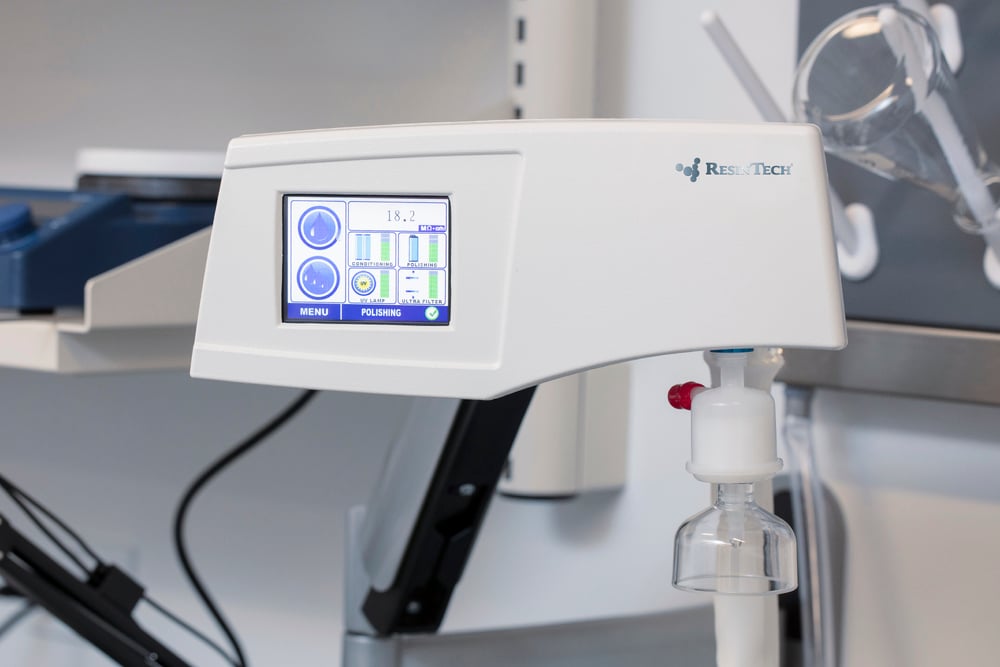
- UV capabilities will oxidize and destroy organics
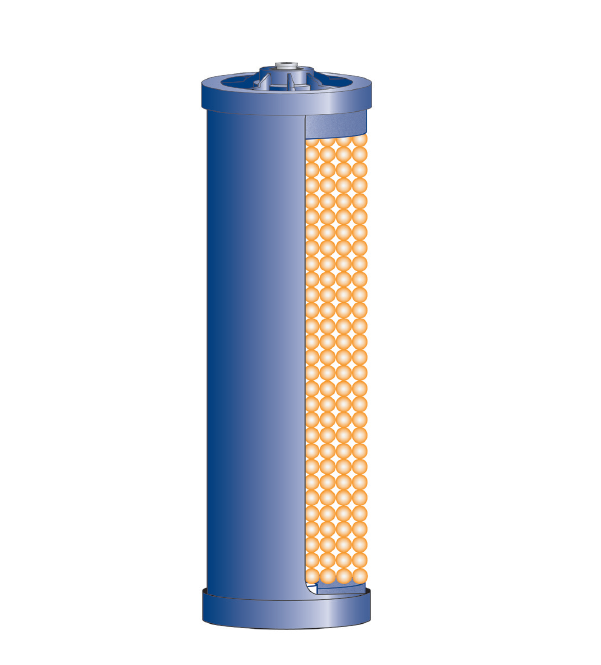
- Ion Exchange Resin-based filters most effectively attract residuals
- TOC Monitoring should be added when ordering lab equipment
- Annual filter replacements and sanitization are a must to maintain ultrapure systems
Make sure your ultrapure water is actually pure — your research depends on it.
Frequently Asked Questions
Q: Why is ultrapure water important in laboratory research?
Ultrapure water (Type 1) is essential because it contains minimal contaminants — including ions, particles, and organic materials — that could interfere with sensitive experiments. Many lab applications, such as chromatography, PCR, and cell culture, rely on ultrapure water to ensure accurate, reproducible results. Any impurities, even trace amounts, can cause data inaccuracies, flawed experiments, or unwanted reactions.
Q: How do organic contaminants get into ultrapure water systems?
Organic contaminants can enter ultrapure water systems in various ways. They can be introduced from environmental sources, reagents, lab air, or even through equipment used in purification systems. If not properly maintained, filters and purification devices in water systems can degrade over time, allowing organic materials to slip through and contaminate the water.
Q: What kind of organic contaminants can affect ultrapure water?
Common organic contaminants include trace organic molecules, solvents, natural organic matter, or biological substances. These contaminants, even at low levels, can interfere with enzymatic reactions, detection methods, or the stability of experimental systems, leading to poor results or false positives in experiments. Microbial growth and biofilm formation can also occur — TOC serves as a food source for bacteria, promoting microbial growth within the water system.
Q: How can I prevent organic contamination in my ultrapure water?
Preventing organic contamination requires regular maintenance of your water purification system. This includes routinely changing filters, sanitizing storage tanks, and ensuring proper sealing and storage of water. Frequent monitoring and testing for contaminants using specific analytical techniques (such as Total Organic Carbon (TOC) analysis) can also help ensure that your ultrapure water remains free from harmful impurities.
Q: What are the signs that my ultrapure water might be contaminated?
Signs include elevated TOC levels (above 10 ppb for ultrapure applications), reduced resistivity or increased conductivity, clogged or malfunctioning filtration equipment such as RO membranes or ion exchange resins, and reduced efficiency of purification steps like RO, UV, and ion exchange. High TOC levels can overload filters, leading to reduced efficiency and potentially premature failure.
Discover the CLïR lab water system best suited for your application.