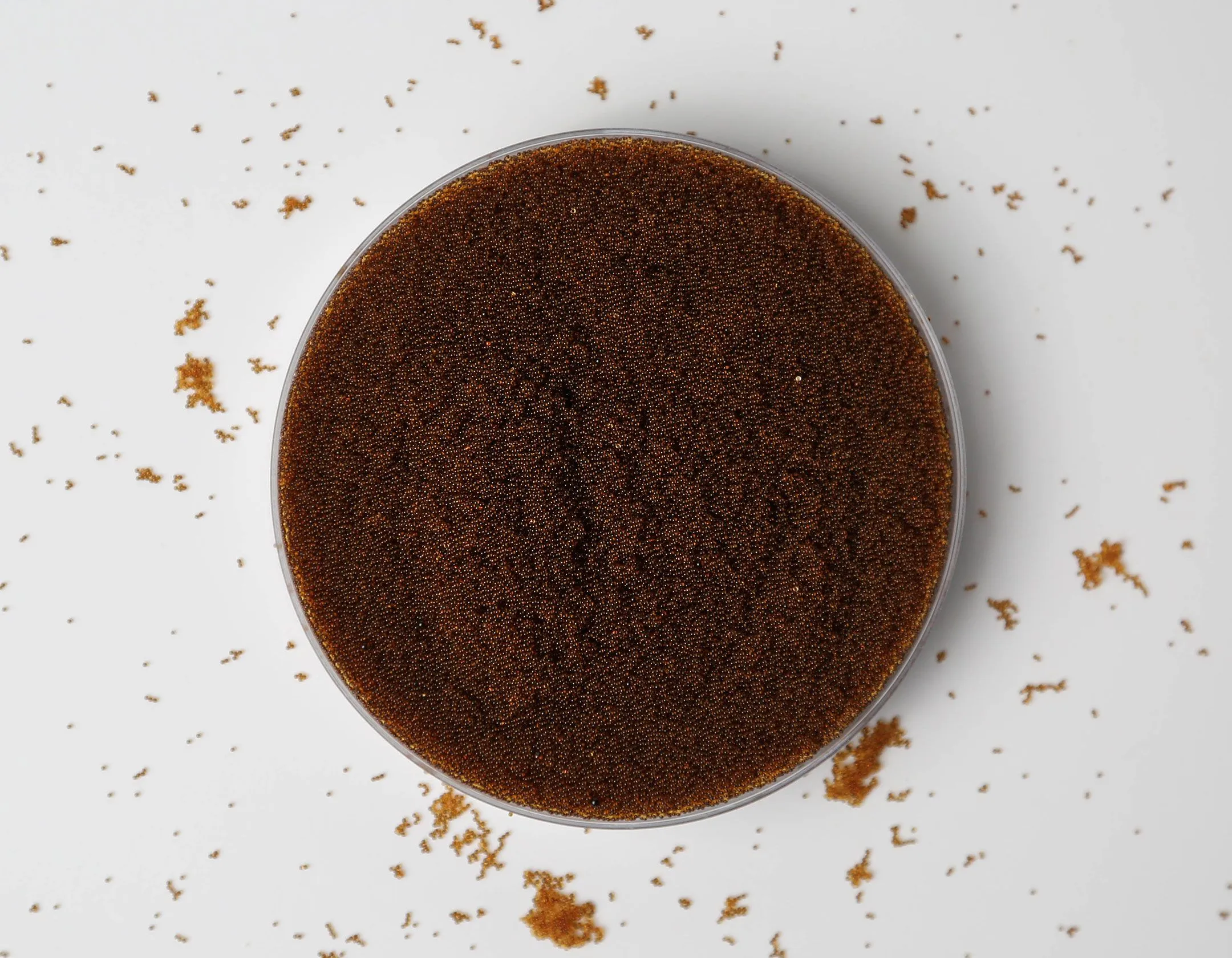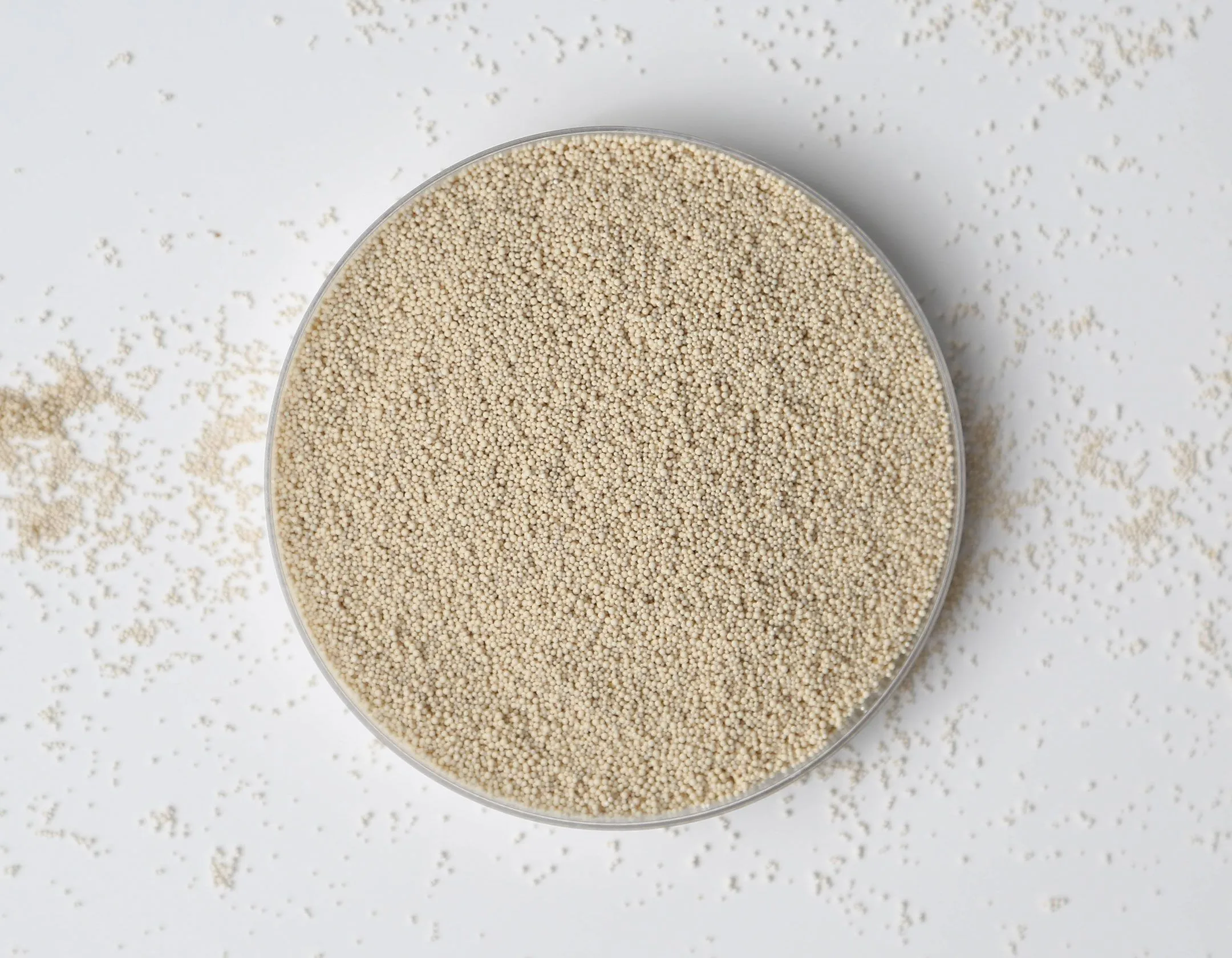
Boiler / Makeup Water
The removal of dissolved ions is critical in the treatment of water intended for use in steam generated power production. These ions can cause scale or corrosion if they appear in the steam cycle.
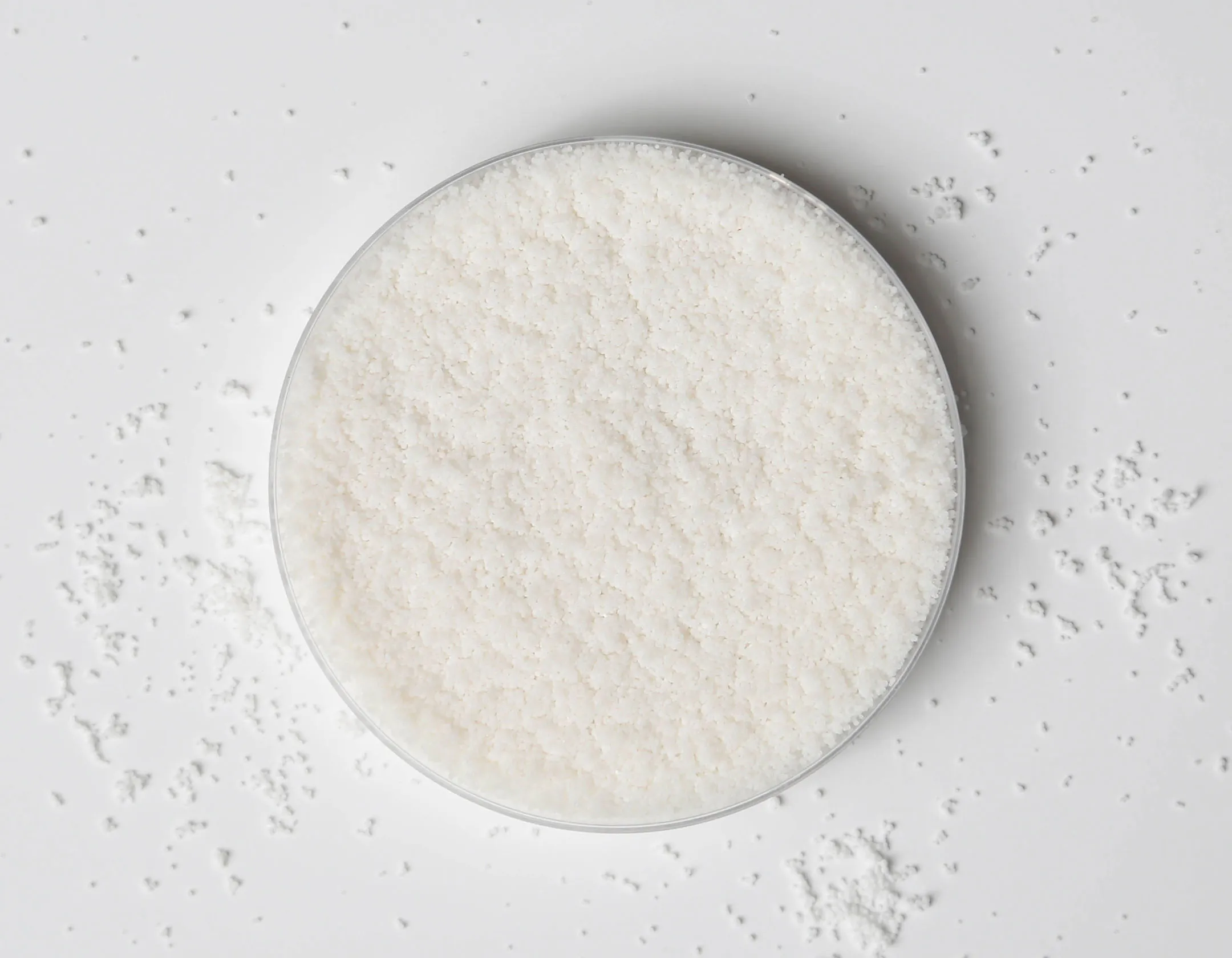
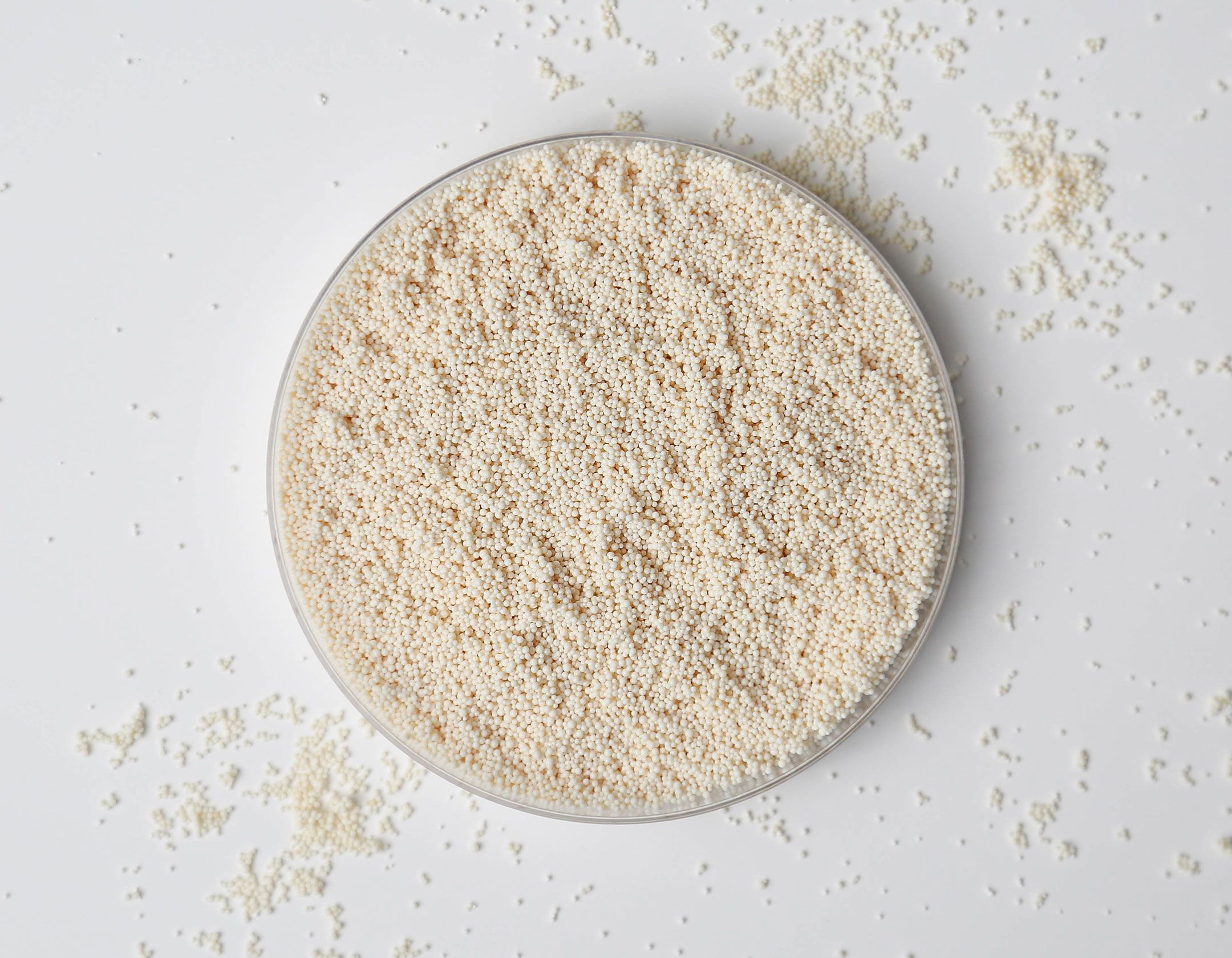
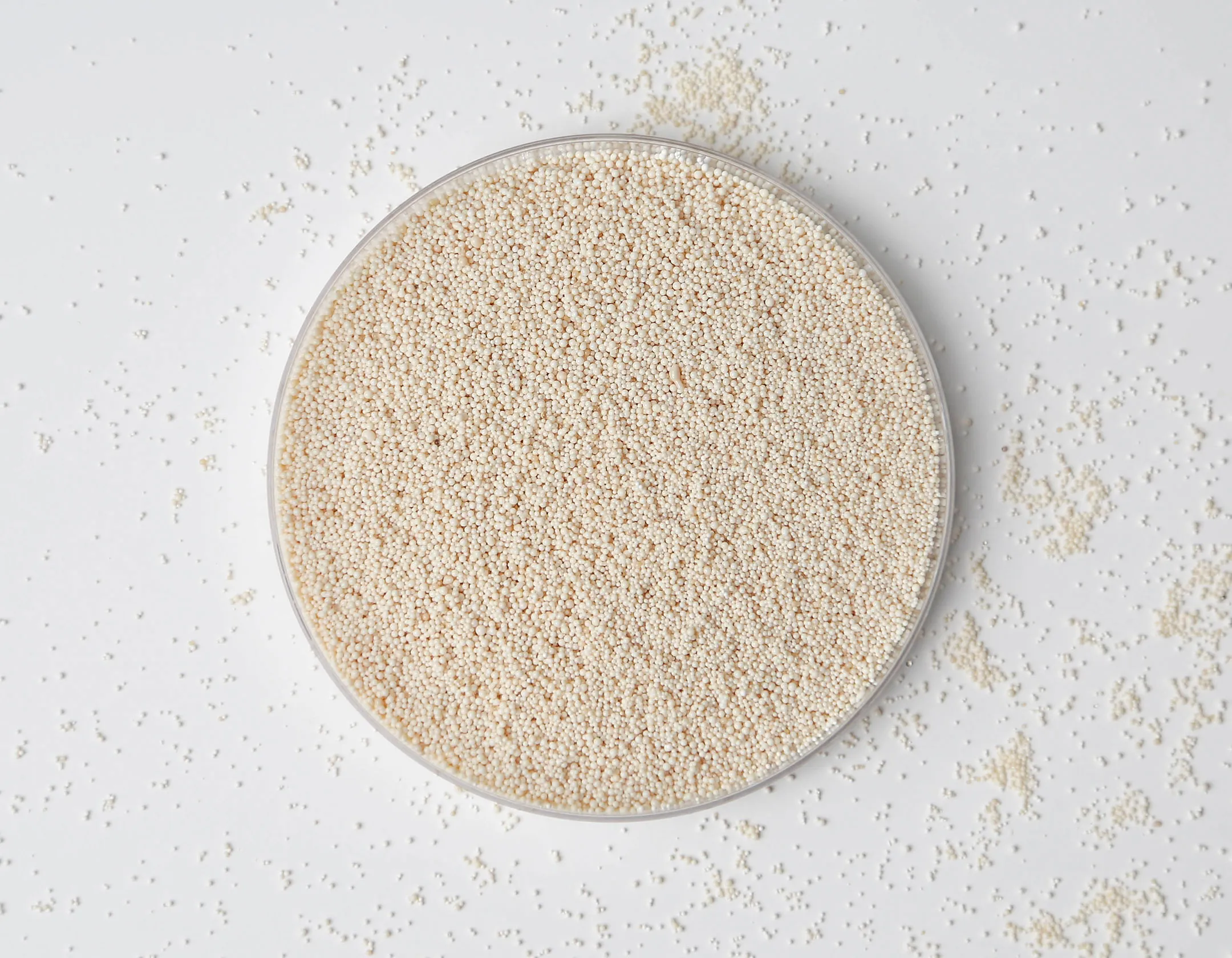
plytix:63c068d00207a140a2d14162|CG10H_Shot22x.jpg
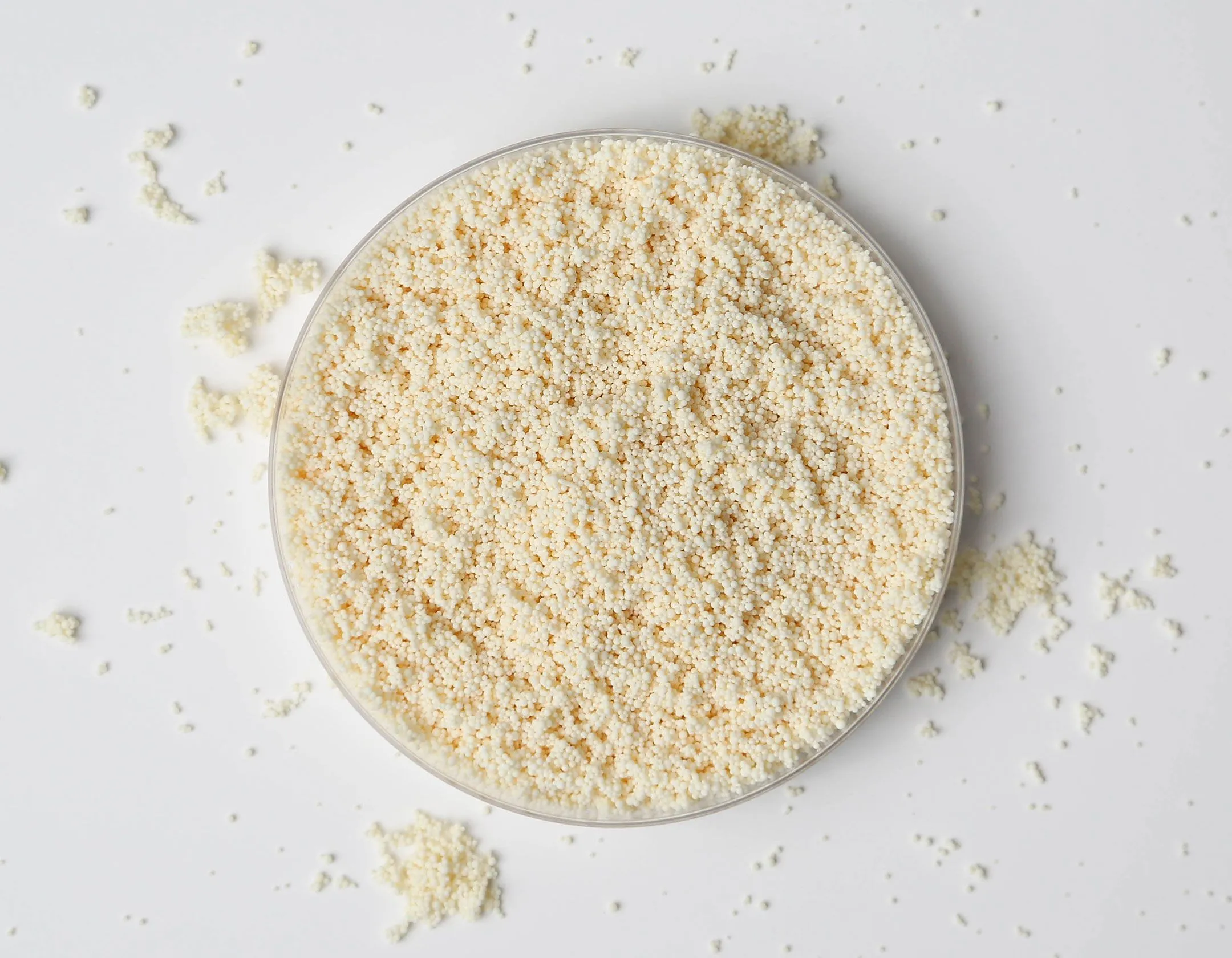
CG10-H
Applications:
Demineralization / DI, Condensate Polishing, Mixed Bed Components
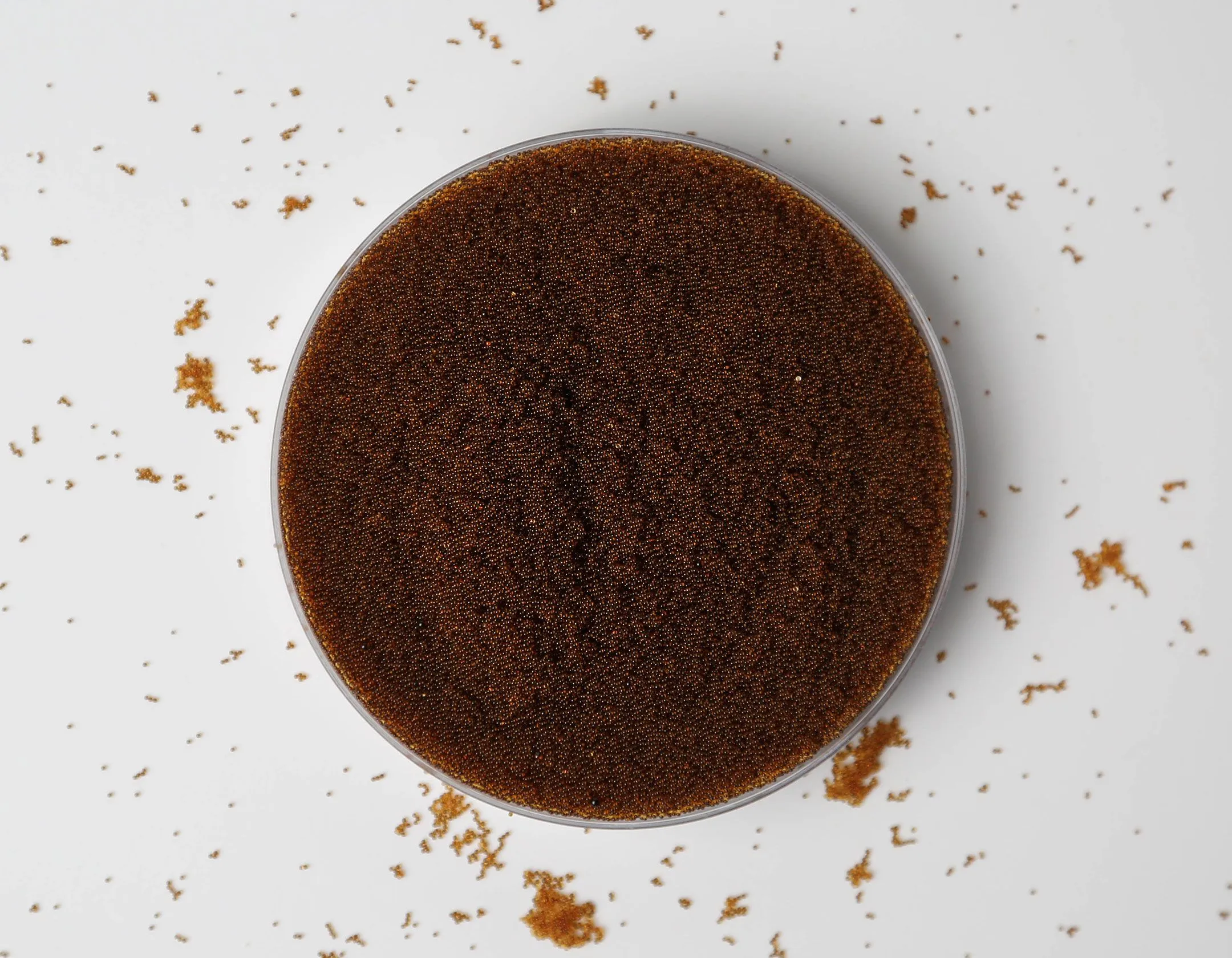
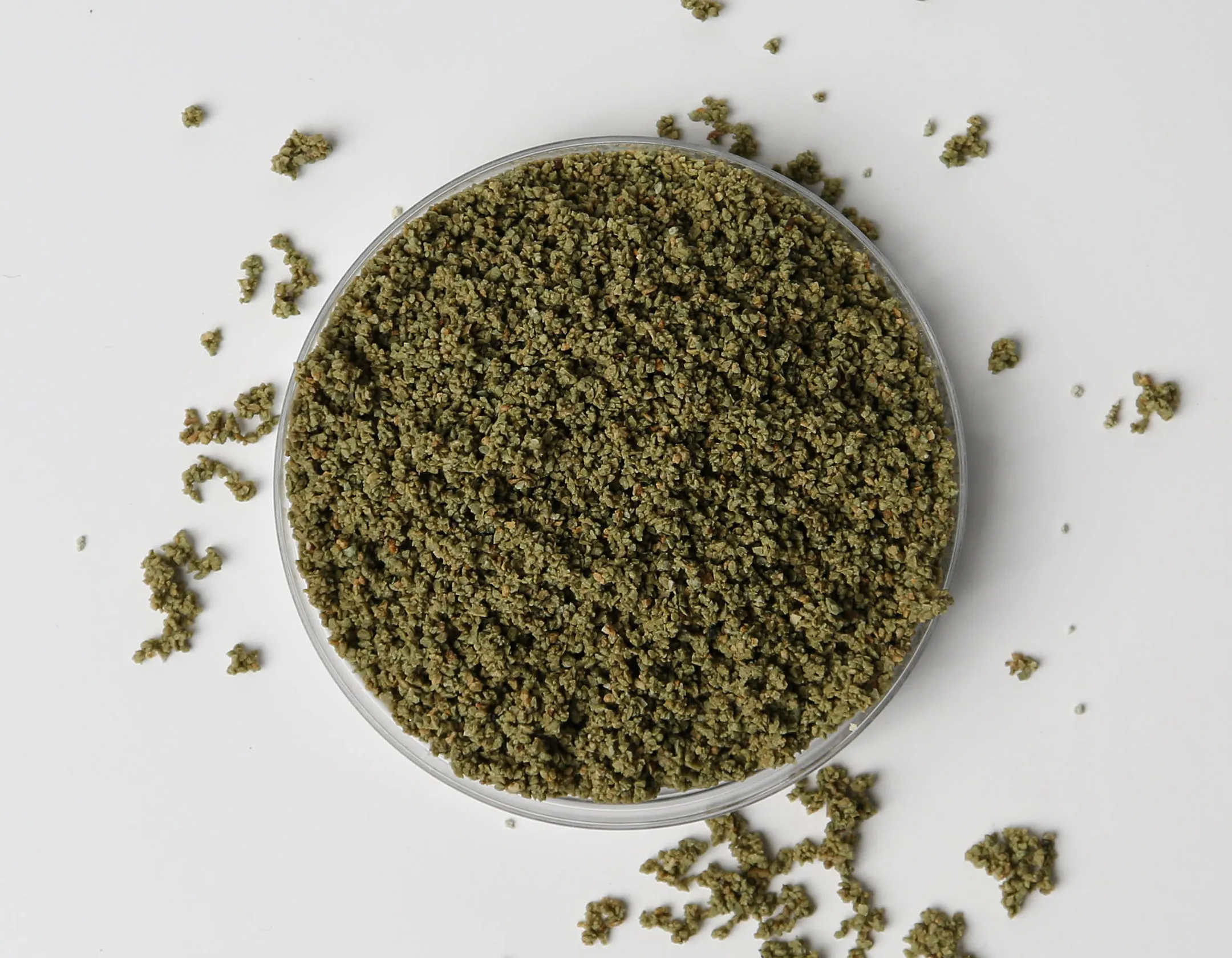
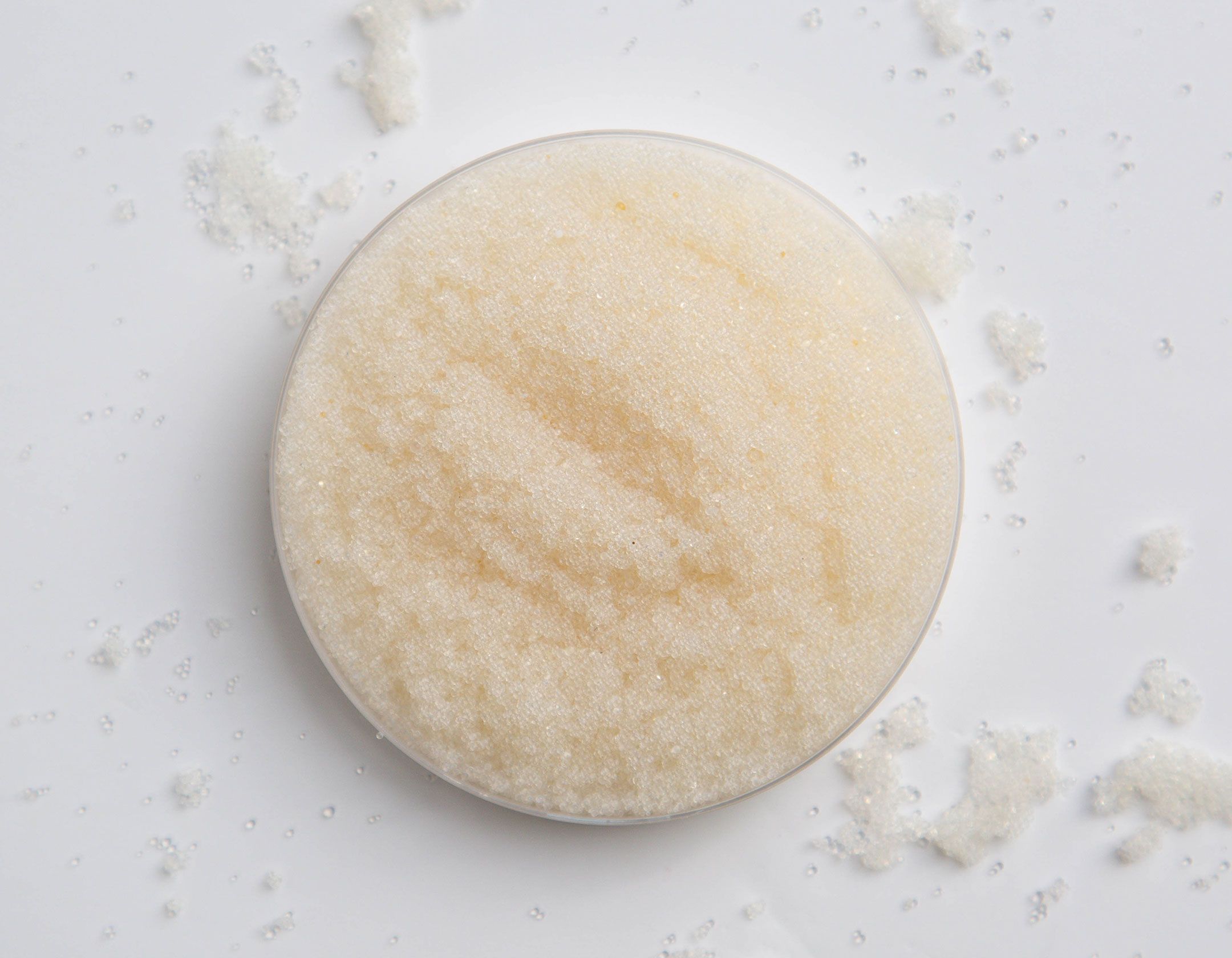
plytix:63c068d00207a140a2d14151|CG8H_Shot22x.jpg
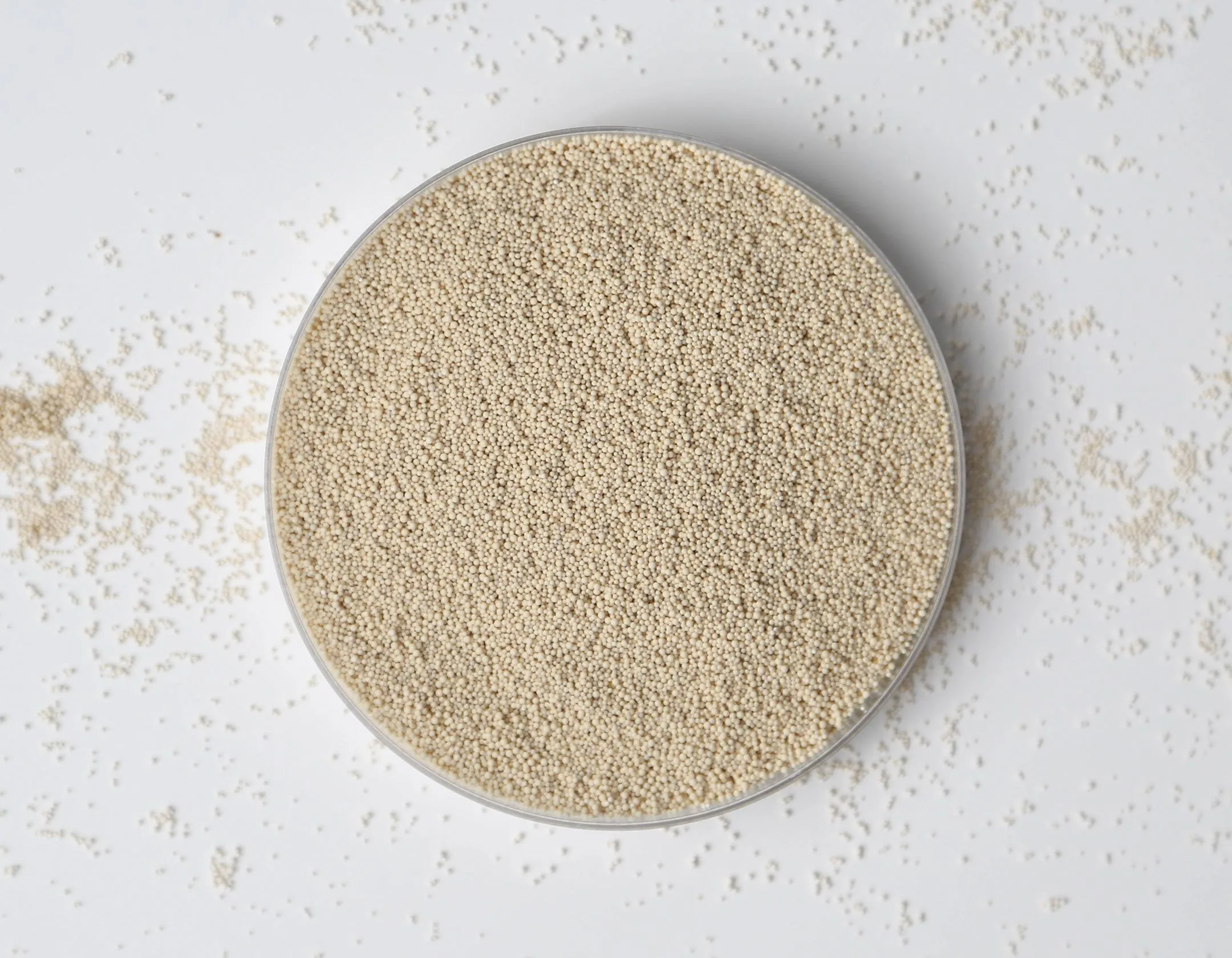
CG8-H
Applications:
Demineralization / DI, Mixed Bed Components
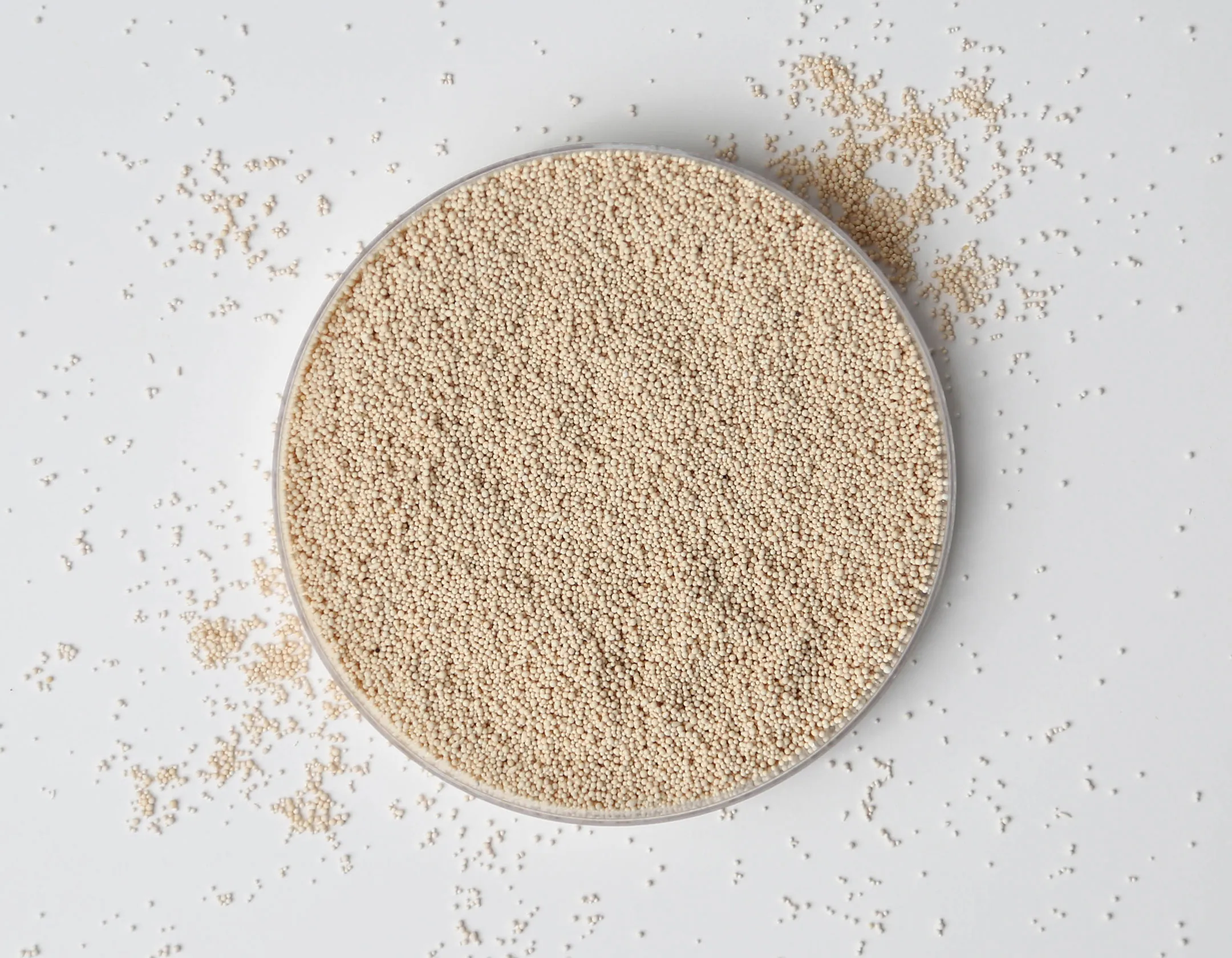
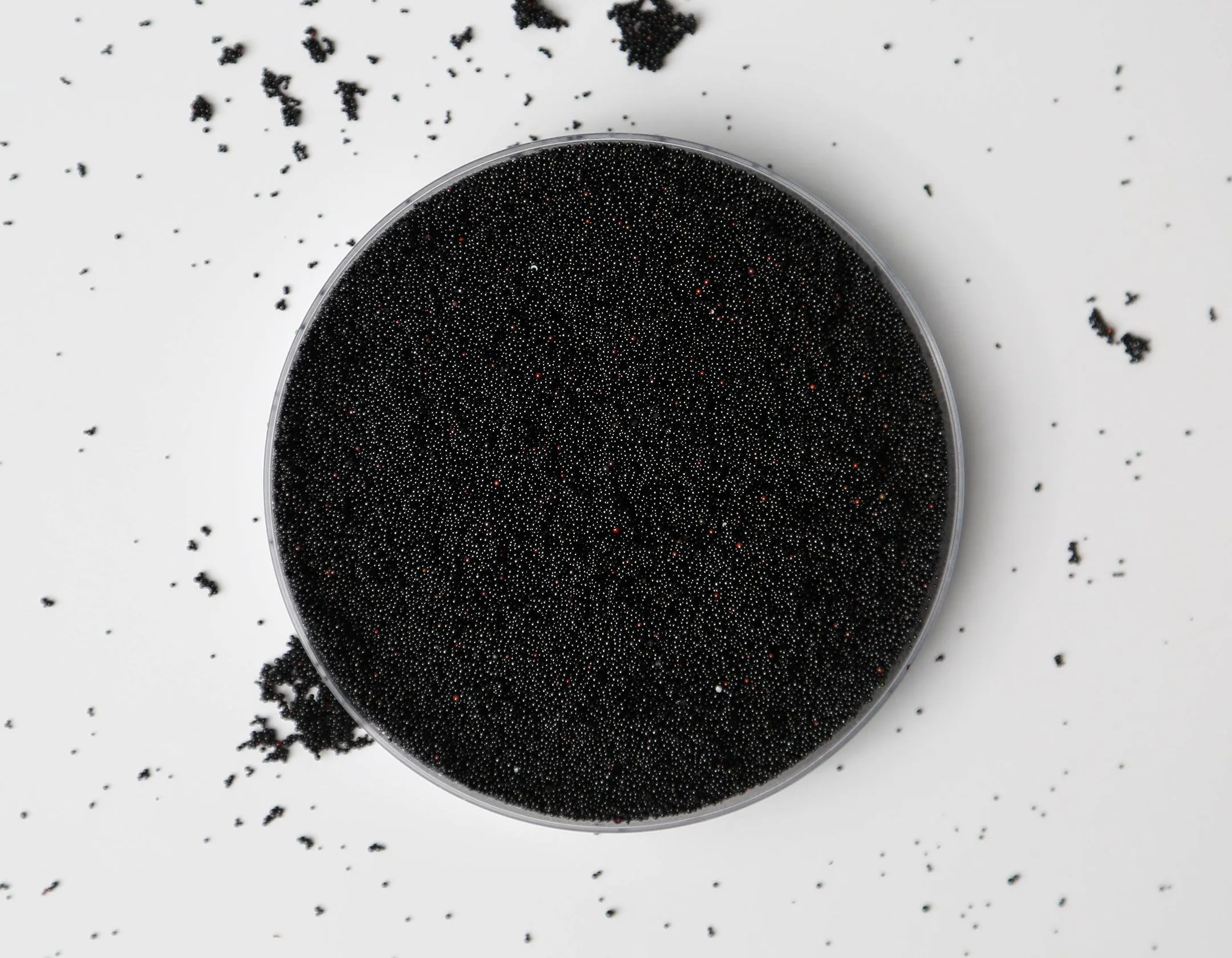
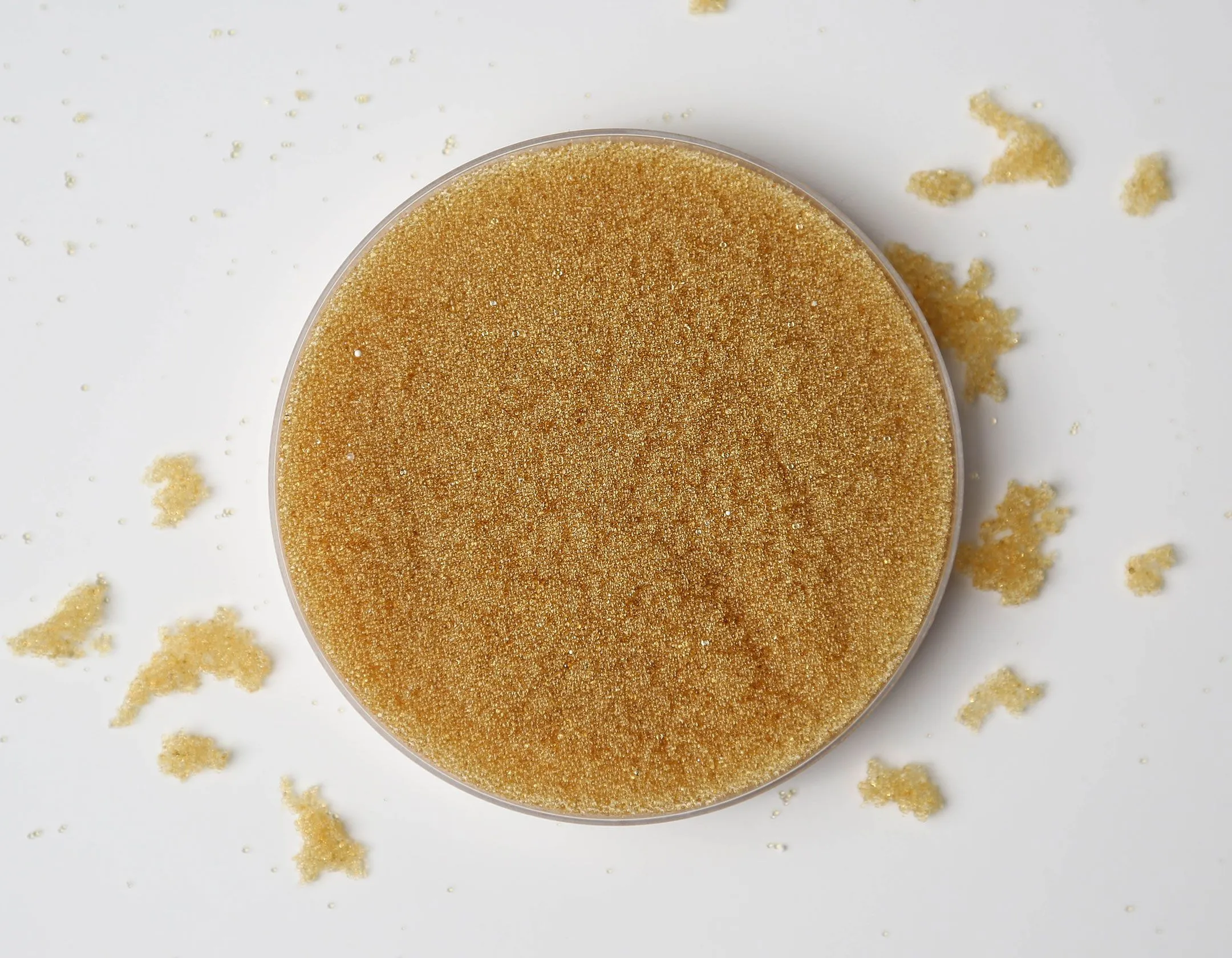
plytix:63c068aa0207a140a2d13aea|SBG1OH_Shot22x.jpg
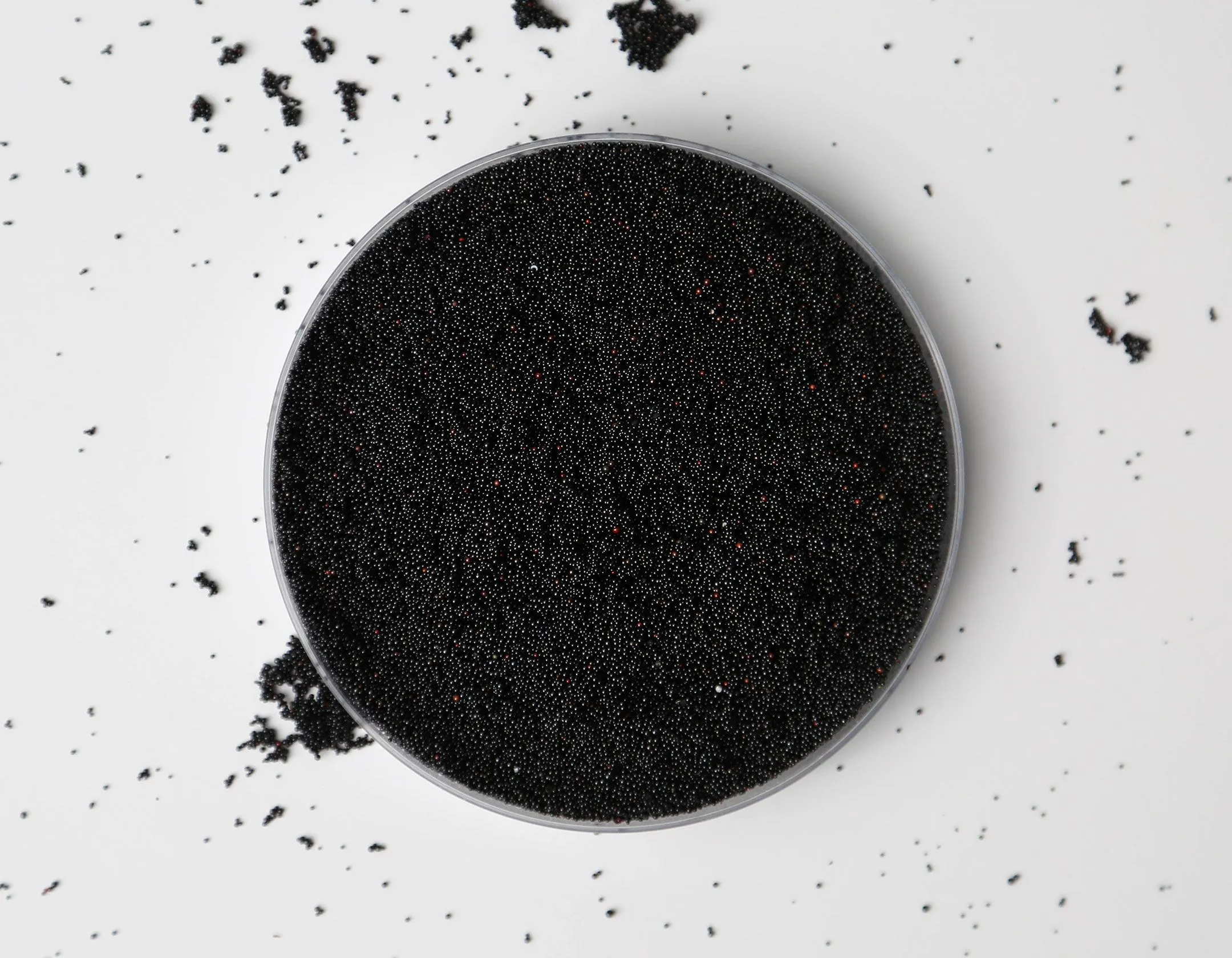
SBG1-OH
Applications:
High Purity DI Water, Demineralization / DI, Mixed Bed Components, Silica Removal
plytix:63c068a80207a140a2d13ad5|SBG1POH_Shot22x.jpg
SBG1P-OH
Applications:
High Purity DI Water, Demineralization / DI, Mixed Bed Components, Silica Removal
Carbonate Reduction
Carbonate is a form of alkalinity (along with bicarbonate and carbon dioxide). Carbonates readily combine with many divalent cations (especially calcium) to form a precipitant. Calcium carbonate precipitation is quite common in waters where the pH is > 9. Carbonate can be removed by various strong base anion resins and can be neutralized (acidified) by various cation resins.
plytix:63c068b10207a140a2d13b5a|CG8HBL_Shot22x.jpg
CG8-H-BL
Applications:
Demineralization / DI, Mixed Bed Components
plytix:63c068bd0207a140a2d13d31|SBG1HP_Shot22x.jpg
SBG1-HP
Applications:
Dealkalizer, Demineralization / DI, Trace Contaminant Removal
plytix:63c068bf0207a140a2d13d93|SBG1PHP_Shot22x.jpg
SBG1P-HP
Applications:
Dealkalizer, Demineralization / DI, Trace Contaminant Removal
plytix:63c068a80207a140a2d13ad0|SBG2HP_Shot22x.jpg
SBG2-HP
Applications:
Dealkalizer, Demineralization / DI, Trace Contaminant Removal
Commercial Softening
Commercial softening applications may require high flow rates or low hardness leakage. Equipment design and regeneration techniques become important in these applications.
ASM - 10 HP
Media Sub Category
Hybrid
Polymer Matrix
Styrene Gel
Application
Arsenic Reduction
Silica Reduction
plytix:63e424e16d97f27a580b9ec0|CG10_image2.jpg
CG10
Applications:
High Temperature Applications, Condensate Polishing, Softening
plytix:63c068ca0207a140a2d13ffe|CG8_Shot22x.jpg
CG8
Applications:
Demineralization / DI, Softening
plytix:63e424e46d97f27a580b9f9b|SACMP_image2.jpg
SACMP
Applications:
Condensate Polishing, Chlorine Tolerant, Radwaste, Softening
Condensate Polishing
Condensed steam in the power cycle is relatively pure but may contain some metal oxides and low levels of dissolved ions. The condensate must undergo purification before reuse.
plytix:63c068d00207a140a2d14166|CG10HCP_Shot22x.jpg
CG10-H-CP
Applications:
Amine Cycle Polishing, Demineralization / DI, Condensate Polishing, Mixed Bed Components
plytix:63c068a70207a140a2d13ac0|SBMP1OH_Shot22x.jpg
SBMP1-OH-CP
Applications:
High Purity DI Water, Condensate Polishing, Ultrapure Water Production (UPW), Demineralization / DI, Mixed Bed Components, Silica Removal
Cooling Tower
Water in cooling towers is used for many cycles and it is important to minimize the potential for scaling. This is accomplished by the removal of hardness ions and also by the addition of conditioning chemicals.
ASM - 10 HP
Media Sub Category
Hybrid
Polymer Matrix
Styrene Gel
Application
Arsenic Reduction
Silica Reduction
CG8
Applications:
Ammonia Reduction Demineralization, Iron Reduction, Softening - Industrial
CG10
Applications:
Demineralization, Softening - High, Temperature, Softening - Industrial
Demineralization / DI
High pressure steam generation requires the removal of all dissolved solids. This can be accomplished with two bed (cation-anion) units or a mixed bed deionizer. It is common practice today to pretreat with reverse osmosis and then deionize with ion exchange.
ASM - 10 HP
Media Sub Category
Hybrid
Polymer Matrix
Styrene Gel
Application
Arsenic Reduction
Silica Reduction
CG8-H
Applications:
Cation Component in Mixed Beds, Demineralization
CG10-H
Applications:
Cation Component in Mixed Beds, Demineralization
SBG1-OH
Applications:
Anion Component in Mixed BedsDemineralization
SBG1P-OH
Applications:
Anion Components In Mixed Beds, Demineralization
MBD-15
Applications:
Portable Exchange Deionization(PEDI), In Place Regeneration
Metals Reduction
Metal oxides are present in condensate streams and must be removed by filtration if present as suspended solids, or by ion exchange if present as dissolved solids.
ASM - 10 HP
Media Sub Category
Hybrid
Polymer Matrix
Styrene Gel
Application
Arsenic Reduction
Silica Reduction
SIR-300
Applications:
Trace Material Reduction
CG8
Applications:
Ammonia Reduction Demineralization, Iron Reduction, Softening - Industrial
CG10
Applications:
Demineralization, Softening - High, Temperature, Softening - Industrial
Organics Reduction (TOCs)
Naturally occurring organic matter (NOM) is readily removed by strong base anion resins. Acrylic strong base resins and styrenic resins with high porosity work better because they are easier to regenerate.
plytix:63e424e56d97f27a580b9fad|SBACR_image2.jpg
SBACR-HP
Applications:
Portable Exchange Deionization(PEDI), In Place Regeneration
plytix:63c068aa0207a140a2d13af6|SBACRMP_Shot22x.jpg
SBACR-MP-HP
Applications:
Portable Exchange Deionization(PEDI), In Place Regeneration
plytix:63c068ba0207a140a2d13ca1|SBMP1-XX_Shot22x.jpg
SX-A40-A
Applications:
Portable Exchange Deionization(PEDI), In Place Regeneration
Radwaste Treatment
Nuclear power plants will generate low level contaminated liquid waste from floor runoff, washing operations, and fuel pool maintenance that can be treated to concentrate the contaminants and reduce the volume of waste.
SIR-600
Applications:
Ammonium Reduction, Cesium Reduction
ASM-125
Applications:
Antimony Reduction, Silica Reduction
As
Arsenic Reduction
Arsenic is a chemical element with symbol As and atomic number 33. Arsenic occurs in many minerals, usually in combination with sulfur and metals, but also as a pure elemental crystal. Arsenic is a metalloid. It has various allotropes, but only the gray form is important to industry.The primary use of metallic arsenic is in alloys of lead (for example, in car batteries and ammunition). Arsenic is a common n-type dopant in semiconductor electronic devices, and the optoelectronic compound gallium arsenide is the second most commonly used semiconductor after doped silicon. Arsenic and its compounds, especially the trioxide, are used in the production of pesticides, treated wood products, herbicides, and insecticides. These applications are declining, howeverA few species of bacteria are able to use arsenic compounds as respiratory metabolites. Trace quantities of arsenic are an essential dietary element in rats, hamsters, goats, chickens, and presumably many other species, including humans.Arsenic is notoriously poisonous to multicellular life. Arsenic trioxide compounds are widely used as pesticides, herbicides and insecticides. As a result, arsenic contamination of groundwater supplies is a problem that affects millions of people around the world.
Arsenate is a divalent anion with affinity for anion resins similar to but slightly lower than that of sulfate Arsenate can be exchanged by strong base anion exchange resins and then adsorbed into the iron hybrid adsorbent of ASM-10-HP.
Except for Gallium arsenide (used as a semiconductor), other arsenide compounds are generally only of academic interest. Gallium arsenide is an important semiconductor because it has much lower electrical resistance than silicon and therefore lower power use and less heat generation.
In most cases arsenite should be oxidized to arsenate so that it is converted to a form more easily removed. Oxidation can be accomplished with chlorine or with oxygen catalyzed by various redox medias.
ASM-10-HP
Applications:
Arsenic Reduction Silica Reduction
SBG1-HP
Applications:
Nitrate Reduction, Potable water, Trace Contaminants (U, Cr, As, Se, F, ClO₄, ClO₃)
Cl2
Chlorine / Chloramine Reduction
Chlorine is a chemical element with symbol Cl and atomic number 17. The second-lightest of the halogens, it appears between fluorine and bromine in the periodic table and its properties are mostly intermediate between them. Chlorine is a yellow-green gas at room temperature. It is an extremely reactive element and a strong oxidising agent: among the elements, it has the highest electron affinity and the third-highest electronegativity, behind only oxygen and fluorine.
The most common compound of chlorine, sodium chloride (common salt), has been known since ancient times. Around 1630, chlorine gas was first synthesised in a chemical reaction, but not recognised as a fundamentally important substance. Carl Wilhelm Scheele wrote a description of chlorine gas in 1774, supposing it to be an oxide of a new element. In 1809, chemists suggested that the gas might be a pure element, and this was confirmed by Sir Humphry Davy in 1810, who named it from Ancient Greek: χλωρός khlôros “pale green” based on its colour.
Chlorine is normally present in water as hypochlorous anion and is removed by strong base anion resins.
(Sodium) hypochlorite is widely used as a bleaching agent; in water treatment as a disinfectant. It is the strongest oxidant among the oxo-chloride series, chlorite, chlorate, or perchlorate.
Disinfection By-Product Removal (DBP)
Disinfection By-Product (DBP) are formed when chlorine reacts with organic compounds in water supplies. The removal of organic prior to chlorination can eliminate the DBP potential, otherwise the DBPs need to be removed by activated carbon.

AGC-40 X
Applications:
Chlorine Reduction, Organics Reduction
AGC-40 XA
Applications:
Chlorine Reduction, Organics Reduction
AGC-40-MG
Applications:
Chlorine Reduction Medical, Organics Reduction Pharmaceutical
AGC-40 C
Applications:
Chlorine Reduction, Organics Reduction
SBG2
Applications:
Sulfate Reduction, Dealkalizer, Nitrate Reduction, Demineralization, Trace Contaminants (U, Cr, As, Se, F, ClO₄, ClO₃)
AGC-40 CA
Applications:
Chlorine Reduction, Organics Reduction
Nitrate Reduction
Nitrite is used as an antioxidant to preserve meats and as a pH stabilizer and corrosion inhibitor in cooling loops. Nitrite is removed by strong base anion resin but since its affinity is similar to that of chloride, throughput capacity is usually limited.
SIR-100-HP
Applications:
Nitrate Reduction, Perchlorate Reduction
SBG1
Applications:
Demineralization Nitrate Reduction Sulfate Reduction Trace Contaminants (U, Cr, As, Se, F, ClO₄, ClO₃)
SBG2-HP
Applications:
Chromate Reduction, Trace Contaminants (U, Cr, As, Se, F, ClO₄, ClO₃), Residential Applications
SBG1-HP
Applications:
Nitrate Reduction, Potable water, Trace Contaminants (U, Cr, As, Se, F, ClO₄, ClO₃)
SIR-110-HP
Applications:
Iodide Reduction, Nitrate Reduction, Perchlorate Reduction, Pertechnetate Reduction, PFAS Reduction
Organics Reduction (TOCs)
Naturally occurring organic matter (NOM) is readily removed by strong base anion resins. Acrylic strong base resins and styrenic resins with high porosity work better because they are easier to regenerate.
SBACR-MP-HP
Applications:
Organic Reduction - Municipal
SBACR-MP-HP
Applications:
Organic Reduction - Municipal
Color Reduction - Municipal
SIR-22P-HP
Applications:
Organic Reduction
SX-A40-A
Applications:
Cane Sugar refined, Syrup decoloration
PFAS Remediation
PFAS compounds have been used in industry and consumer products worldwide since the 1940s. Their remarkable hydro- and oleophobic characteristics (ability to repel both oil and water) give them utility in a seemingly endless array of applications including nonstick cookware, water repellent clothing, stain resistant fabrics and carpets, product packaging, some cosmetics, some firefighting foams, and literally tens of thousands of other products that resist grease, water, and oil.
More than 500 forever chemicals are being actively used in products and industries around the world. A United States Environmental Protection Agency (EPA) toxicity database, DSSTox, lists over 14,700 PFAS compounds in existence, while other toxicity databases lists many multiples more.
ResinTech offers a variety of PFOS & PFAS remediation options, including PFOS filtration and PFOS testing kits to help you identify and remove these chemicals from your needed water.
Want to learn more?
SIR-110-HP
Applications:
Iodide Reduction, Nitrate Reduction, Perchlorate Reduction, Pertechnetate Reduction, PFAS Reduction
AGC-PFx
Applications:
Organics Reduction, PFAS Reduction
SIR-110-MP-HP
Applications:
Iodide Reduction, Pertechnetate Reduction PFAS Reduction, Nitrate Reduction, Pacholorate Reduction
Residential Scale Prevention
Hardness ions, comprised of calcium and magnesium, can cause scaling of heated surfaces and shorten the life of appliances such as hot water heaters, dishwashers, and washing machines. The presence of1 hardness in water leads to greater soap consumption in laundry and cleaning operations.
WACG-HP
Applications:
Ammonia Reduction Demineralization, Iron Reduction, Softening - Industrial
CG8
Applications:
Ammonia Reduction Demineralization, Iron Reduction, Softening - Industrial
AGC-40 C
Applications:
Chlorine Reduction, Organics Reduction
CGS
Applications:
Softening - Residential
CGS-BL
Applications:
Softening - Residential
CNS-F
Applications:
Iron Reduction - Residential, Softening - Residential
SBG2
Applications:
Sulfate Reduction, Dealkalizer, Nitrate Reduction, Demineralization, Trace Contaminants (U, Cr, As, Se, F, ClO₄, ClO₃)
Residential Softening
Hardness ions, comprised of calcium and magnesium, can cause scaling of heated surfaces and shorten the life of appliances such as hot water heaters, dishwashers, and washing machines. The presence of1 hardness in water leads to greater soap consumption in laundry and cleaning operations.
Heavy Metal Reduction
Heavy metals are found in many industrial wastewater as well as sometimes occurring naturally in some groundwaters. Typically present in relatively low levels as compared to other dissolved ions, the ability to selectively remove these ions is accomplished with a specialty weak acid cation resin.
SIR-300
Applications:
Trace Material Reduction
CG8
Applications:
Ammonia Reduction Demineralization, Iron Reduction, Softening - Industrial
CG10
Applications:
Demineralization, Softening - High, Temperature, Softening - Industrial
SIR-200
Applications:
Mercury Reduction, Precious Metals
SIR-100-HP
Applications:
Nitrate Reduction, Perchlorate Reduction
ASM-10-HP
Applications:
Arsenic Reduction Silica Reduction
Organics Reduction (TOCs)
Naturally occurring organic matter (NOM) is readily removed by strong base anion resins. Acrylic strong base resins and styrenic resins with high porosity work better because they are easier to regenerate.
SBACR-MP-HP
Applications:
Organic Reduction - Municipal
SBACR-MP-HP
Applications:
Organic Reduction - Municipal
Color Reduction - Municipal
SIR-22P-HP
Applications:
Organic Reduction
SX-A40-A
Applications:
Cane Sugar refined, Syrup decoloration
PFAS Remediation
PFAS compounds have been used in industry and consumer products worldwide since the 1940s. Their remarkable hydro- and oleophobic characteristics (ability to repel both oil and water) give them utility in a seemingly endless array of applications including nonstick cookware, water repellent clothing, stain resistant fabrics and carpets, product packaging, some cosmetics, some firefighting foams, and literally tens of thousands of other products that resist grease, water, and oil.
More than 500 forever chemicals are being actively used in products and industries around the world. A United States Environmental Protection Agency (EPA) toxicity database, DSSTox, lists over 14,700 PFAS compounds in existence, while other toxicity databases lists many multiples more.
ResinTech offers a variety of PFOS & PFAS remediation options, including PFOS filtration and PFOS testing kits to help you identify and remove these chemicals from your needed water.
Want to learn more?
SIR-110-HP
Applications:
Iodide Reduction, Nitrate Reduction, Perchlorate Reduction, Pertechnetate Reduction, PFAS Reduction
AGC-PFx
Applications:
Organics Reduction, PFAS Reduction
SIR-110-MP-HP
Applications:
Iodide Reduction, Pertechnetate Reduction PFAS Reduction, Nitrate Reduction, Pacholorate Reduction
Precious Metals Recovery
Precious metals are used in some printed circuit board applications as well as in the manufacture of automotive catalytic converters.
SIR-400
Applications:
Mercury Reduction, Previous Metals Recovery
SBG1
Applications:
Demineralization Nitrate Reduction Sulfate Reduction Trace Contaminants (U, Cr, As, Se, F, ClO₄, ClO₃)
C
Volatile Organic Carbon (VOC)
VOCs are organic man-made compounds that are used as ingredients in paints, pesticides, coolants, dry-cleaning chemicals, fuels and petroleum products. They are emitted as gases from liquids and are known health hazards.
AGC-40 X
Applications:
Chlorine Reduction, Organics Reduction
AGC-40 XA
Applications:
Chlorine Reduction, Organics Reduction
AGC-40 C
Applications:
Chlorine Reduction, Organics Reduction
AGC-40 CA
Applications:
Chlorine Reduction, Organics Reduction
As
Arsenic Reduction
Arsenic is a chemical element with symbol As and atomic number 33. Arsenic occurs in many minerals, usually in combination with sulfur and metals, but also as a pure elemental crystal. Arsenic is a metalloid. It has various allotropes, but only the gray form is important to industry.
The primary use of metallic arsenic is in alloys of lead (for example, in car batteries and ammunition). Arsenic is a common n-type dopant in semiconductor electronic devices, and the optoelectronic compound gallium arsenide is the second most commonly used semiconductor after doped silicon. Arsenic and its compounds, especially the trioxide, are used in the production of pesticides, treated wood products, herbicides, and insecticides. These applications are declining, however A few species of bacteria are able to use arsenic compounds as respiratory metabolites. Trace quantities of arsenic are an essential dietary element in rats, hamsters, goats, chickens, and presumably many other species, including humans.Arsenic is notoriously poisonous to multicellular life. Arsenic trioxide compounds are widely used as pesticides, herbicides and insecticides. As a result, arsenic contamination of groundwater supplies is a problem that affects millions of people around the world.

Arsenate is a divalent anion with affinity for anion resins similar to but slightly lower than that of sulfate Arsenate can be exchanged by strong base anion exchange resins and then adsorbed into the iron hybrid adsorbent of ASM-10-HP.

Except for Gallium arsenide (used a semiconductor), other arsenide compounds are generally only of academic interest. Gallium arsenide is an important semiconductor because it has much lower electrical resistance than silicon and therefore lower power use and less heat generation.

In most cases arsenite should be oxidized to arsenate so that it is converted to a form more easily removed. Oxidation can be accomplished with chlorine or with oxygen catalyzed by various redox medias.
ASM-10-HP
Applications:
Arsenic Reduction Silica Reduction
SBG1-HP
Applications:
Nitrate Reduction, Potable water, Trace Contaminants (U, Cr, As, Se, F, ClO₄, ClO₃)
SBG2-HP
Applications:
Chromate Reduction, Trace Contaminants (U, Cr, As, Se, F, ClO₄, ClO₃), Residential Applications
Disinfection By-Product Removal (DBP)
Disinfection By-Product (DBP) are formed when chlorine reacts with organic compounds in water supplies. The removal of organic prior to chlorination can eliminate the DBP potential, otherwise the DBPs need to be removed by activated carbon.
AGC-40 X
Applications:
Chlorine Reduction, Organics Reduction
AGC-40 XA
Applications:
Chlorine Reduction, Organics Reduction
AGC-40 C
Applications:
Chlorine Reduction, Organics Reduction
AGC-40 CA
Applications:
Chlorine Reduction, Organics Reduction
Nitrate Reduction
Strong base anion resin have good affinity for nitrate. The higher amines (triethylamine, tributylamine, etc.) have increased affinity for nitrate and decreased affinity for divalent ions such as sulfate, making them preferred for many applications.
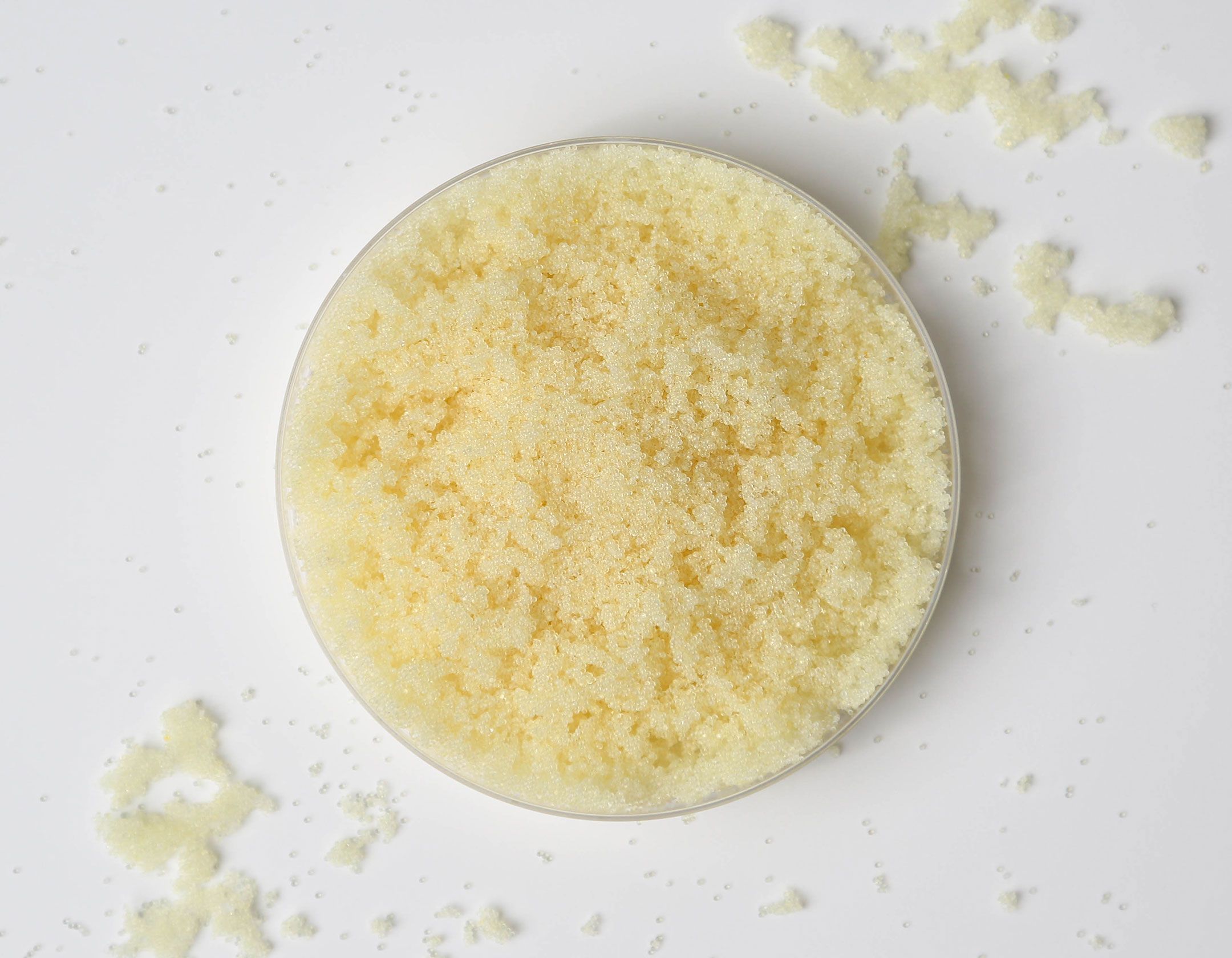
SIR-100-HP
Applications:
Nitrate Reduction, Perchlorate Reduction
SBG2-HP
Applications:
Chromate Reduction, Trace Contaminants (U, Cr, As, Se, F, ClO₄, ClO₃), Residential Applications
SBG1-HP
Applications:
Nitrate Reduction, Potable water, Trace Contaminants (U, Cr, As, Se, F, ClO₄, ClO₃)
SBG1
Applications:
Demineralization Nitrate Reduction Sulfate Reduction Trace Contaminants (U, Cr, As, Se, F, ClO₄, ClO₃)
SIR-110-HP
Applications:
Iodide Reduction, Nitrate Reduction, Perchlorate Reduction, Pertechnetate Reduction, PFAS Reduction
Organics Reduction (TOCs)
Naturally occurring organic matter (NOM) is readily removed by strong base anion resins. Acrylic strong base resins and styrenic resins with high porosity work better because they are easier to regenerate.
SBACR-MP-HP
Applications:
Organic Reduction - Municipal
SX-A40-A
Applications:
Cane Sugar refined, Syrup decoloration
Perchlorate Reduction
Perchlorate is a relatively weak oxidant, used as an oxygen source in rocket fuel. Perchlorate is also a contaminant in ammonium nitrate fertilizer.
Although all strong base anion resin have high affinity for perchlorate, the higher amines (such as tributylamine) have exceptional affinity for perchlorate.
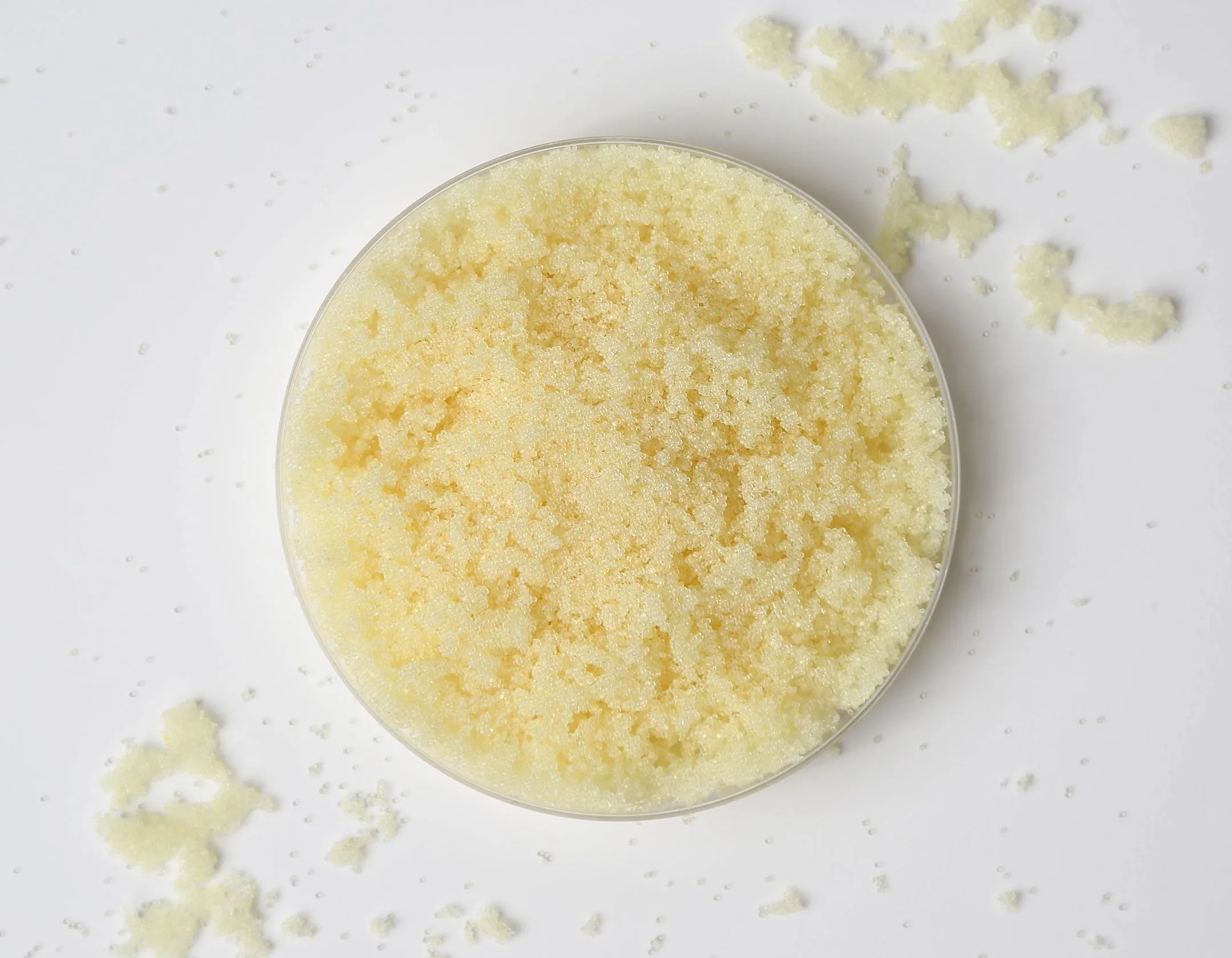
SIR-110-HP
Applications:
Iodide Reduction, Nitrate Reduction, Perchlorate Reduction, Pertechnetate Reduction, PFAS Reduction
SIR-110-MP-HP
Applications:
Iodide Reduction, Pertechnetate Reduction PFAS Reduction, Nitrate Reduction, Pacholorate Reduction
PFAS Remediation
PFAS compounds have been used in industry and consumer products worldwide since the 1940s. Their remarkable hydro- and oleophobic characteristics (ability to repel both oil and water) give them utility in a seemingly endless array of applications including nonstick cookware, water repellent clothing, stain resistant fabrics and carpets, product packaging, some cosmetics, some firefighting foams, and literally tens of thousands of other products that resist grease, water, and oil.
More than 500 forever chemicals are being actively used in products and industries around the world. A United States Environmental Protection Agency (EPA) toxicity database, DSSTox, lists over 14,700 PFAS compounds in existence, while other toxicity databases lists many multiples more.
ResinTech offers a variety of PFOS & PFAS remediation options, including PFOS filtration and PFOS testing kits to help you identify and remove these chemicals from your needed water.
Want to learn more?
SIR-110-HP
Applications:
Iodide Reduction, Nitrate Reduction, Perchlorate Reduction, Pertechnetate Reduction, PFAS Reduction
AGC-PFx
Applications:
Organics Reduction, PFAS Reduction
SIR-110-MP-HP
Applications:
Iodide Reduction, Pertechnetate Reduction PFAS Reduction, Nitrate Reduction, Pacholorate Reduction
Ra
Radium Reduction
Radium is a chemical element with symbol Ra and atomic number 88. It is the sixth element in group 2 of the periodic table, also known as the alkaline earth metals. Pure radium is silvery-white, but it readily combines with nitrogen (rather than oxygen) on exposure to air, forming a black surface layer of radium nitride (Ra3N2). All isotopes of radium are highly radioactive, with the most stable isotope being radium-226, which has a half-life of 1600 years and decays into radon gas (specifically the isotope radon-222). When radium decays, ionizing radiation is a product, which can excite fluorescent chemicals and cause radioluminescence.
Radium is the daughter product of uranium decay and is heaviest alkaline earth metal. It was discovered in the form of radium chloride by Marie and Pierre Curie in 1898. They extracted the radium compound from uraninite and published the discovery at the French Academy of Sciences five days later. Radium was isolated in its metallic state by Marie Curie and André-Louis Debierne through the electrolysis of radium chloride in 1911.It has the property of luminescence and was once used to make watch dials glow in the dark as well as for various quack products
Radium forms a divalent cation in water and can be removed by water softening resins, along with other hardness ions. Except for the first exhaustion cycle, radium leakage occurs shortly after hardness leakage occurs, therefore the resin is used as an ordinary softener with brine regeneration at regular intervals.
The highly crosslinked macroporous cation resin have extended first cycle operation past hardness break and can be used in single use applications when hardness and TDS are not too high. RSM-50 has barium sulfate deposited in the pores of the resin. Radium is first exchanged and then transfer to the precipitant, allowing much higher loading and longer throughput.
CG8
Applications:
Ammonia Reduction Demineralization, Iron Reduction, Softening - Industrial
CG10
Applications:
Demineralization, Softening - High, Temperature, Softening - Industrial
RSM-25
Applications:
Loading Formula (Radiation), Radium Reduction
RSM-50-HP
Applications:
Radium Reduction
As
Arsenic Reduction
Arsenic is a chemical element with symbol As and atomic number 33. Arsenic occurs in many minerals, usually in combination with sulfur and metals, but also as a pure elemental crystal. Arsenic is a metalloid. It has various allotropes, but only the gray form is important to industry.
The primary use of metallic arsenic is in alloys of lead (for example, in car batteries and ammunition). Arsenic is a common n-type dopant in semiconductor electronic devices, and the optoelectronic compound gallium arsenide is the second most commonly used semiconductor after doped silicon. Arsenic and its compounds, especially the trioxide, are used in the production of pesticides, treated wood products, herbicides, and insecticides. These applications are declining, however A few species of bacteria are able to use arsenic compounds as respiratory metabolites. Trace quantities of arsenic are an essential dietary element in rats, hamsters, goats, chickens, and presumably many other species, including humans.Arsenic is notoriously poisonous to multicellular life. Arsenic trioxide compounds are widely used as pesticides, herbicides and insecticides. As a result, arsenic contamination of groundwater supplies is a problem that affects millions of people around the world.

Arsenate is a divalent anion with affinity for anion resins similar to but slightly lower than that of sulfate Arsenate can be exchanged by strong base anion exchange resins and then adsorbed into the iron hybrid adsorbent of ASM-10-HP.

Except for Gallium arsenide (used a semiconductor), other arsenide compounds are generally only of academic interest. Gallium arsenide is an important semiconductor because it has much lower electrical resistance than silicon and therefore lower power use and less heat generation.

In most cases arsenite should be oxidized to arsenate so that it is converted to a form more easily removed. Oxidation can be accomplished with chlorine or with oxygen catalyzed by various redox medias.
ASM-10-HP
Applications:
Arsenic Reduction Silica Reduction
SBG1-HP
Applications:
Nitrate Reduction, Potable water, Trace Contaminants (U, Cr, As, Se, F, ClO₄, ClO₃)
SBG2-HP
Applications:
Chromate Reduction, Trace Contaminants (U, Cr, As, Se, F, ClO₄, ClO₃), Residential Applications
As
Arsenic Reduction

Arsenic is a chemical element with symbol As and atomic number 33. Arsenic occurs in many minerals, usually in combination with sulfur and metals, but also as a pure elemental crystal. Arsenic is a metalloid. It has various allotropes, but only the gray form is important to industry.The primary use of metallic arsenic is in alloys of lead (for example, in car batteries and ammunition). Arsenic is a common n-type dopant in semiconductor electronic devices, and the optoelectronic compound gallium arsenide is the second most commonly used semiconductor after doped silicon. Arsenic and its compounds, especially the trioxide, are used in the production of pesticides, treated wood products, herbicides, and insecticides. These applications are declining, however A few species of bacteria are able to use arsenic compounds as respiratory metabolites. Trace quantities of arsenic are an essential dietary element in rats, hamsters, goats, chickens, and presumably many other species, including humans.Arsenic is notoriously poisonous to multicellular life. Arsenic trioxide compounds are widely used as pesticides, herbicides and insecticides. As a result, arsenic contamination of groundwater supplies is a problem that affects millions of people around the world.

Arsenate is a divalent anion with affinity for anion resins similar to but slightly lower than that of sulfate Arsenate can be exchanged by strong base anion exchange resins and then adsorbed into the iron hybrid adsorbent of ASM-10-HP.

Except for Gallium arsenide (used a semiconductor), other arsenide compounds are generally only of academic interest. Gallium arsenide is an important semiconductor because it has much lower electrical resistance than silicon and therefore lower power use and less heat generation.

In most cases arsenite should be oxidized to arsenate so that it is converted to a form more easily removed. Oxidation can be accomplished with chlorine or with oxygen catalyzed by various redox medias.

ASM-10-HP
Applications:
Arsenic Reduction
Silica Reduction
Phosphate Removal
SBG1-HP
Applications:
Dealkalizer
Demineralization / DI
Trace Contaminant Removal
SBG2-HP
Applications:
Dealkalizer
Demineralization / DI
Trace Contaminant Removal
Disinfection By-Product Removal (DBP)

Disinfection By-Product (DBP) are formed when chlorine reacts with organic compounds in water supplies. The removal of organic prior to chlorination can eliminate the DBP potential, otherwise the DBPs need to be removed by activated carbon.

AGC-40 X
Applications:
Dechlorination
Taste & Odor Correction
Organics
AGC-40 XA
Applications:
Dechlorination
Taste & Odor Correction
Organics
AGC-40-MG
Applications:
Chlorine Reduction
Medical
Organics Reduction
Pharmaceutical
AGC-40 C
Applications:
Dechlorination
Taste & Odor Correction
Organics
AGC-40 CA
Applications:
Dechlorination
Taste & Odor Correction
Organics
Nitrate Reduction

Strong base anion resin have good affinity for nitrate. The higher amines (triethylamine, tributylamine, etc.) have increased affinity for nitrate and decreased affinity for divalent ions such as sulfate, making them preferred for many applications.

SIR-100-HP
Applications:
Cartridge Applications
Nitrate Removal
Perchlorate Removal
SBG2-HP
Applications:
Dealkalizer
Demineralization / DI
Trace Contaminant Removal
SBG1-HP
Applications:
Dealkalizer
Demineralization / DI
Trace Contaminant Removal
SBG1
Applications:
Dealkalizer
Demineralization / DI
Trace Contaminant Removal
SIR-110
Applications:
Drinking Water Purification
Cartridge Applications
Iodide Removal
Nitrate Removal
Pertechnetate Reduction
Organics Reduction (TOCs)

Naturally occurring organic matter (NOM) is readily removed by strong base anion resins. Acrylic strong base resins and styrenic resins with high porosity work better because they are easier to regenerate.

SBACR-MP-HP
Applications:
Drinking Water Purification
Tannin
SK-A40-A
Applications:
Cane Sugar refined
Syrup Decoloration
SBACR-HP
Applications:
Portable Exchange Deionization (PEDI)
In-Place Regeneration
Perchlorate Reduction

Perchlorate is a relatively weak oxidant, used as an oxygen source in rocket fuel. Perchlorate is also a contaminant in ammonium nitrate fertilizer.Although all strong base anion resin have high affinity for perchlorate, the higher amines (such as tributylamine) have exceptional affinity for perchlorate.

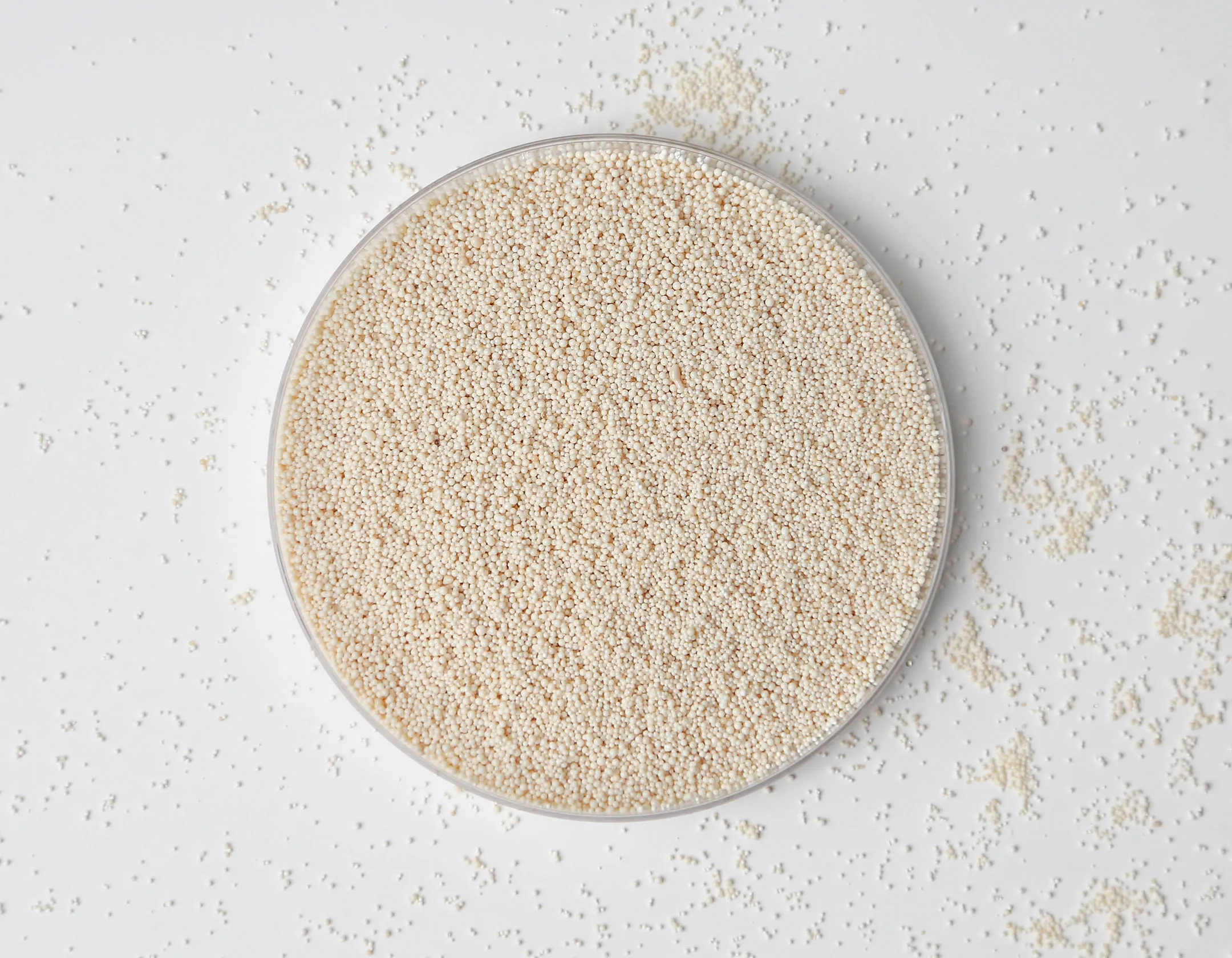
SIR-110-HP
Applications:
Drinking Water Purification
Cartridge Applications
Iodide Removal
Nitrate Removal
Pertectnetate Removal
SIR-110-MP-HP
Applications:
Drinking Water Purification
Cartridge Applications
Iodide Removal
Nitrate Removal
Perchlorate Removal
PFAS Remediation

8PFAS compounds have been used in industry and consumer products worldwide since the 1940s. Their remarkable hydro- and oleophobic characteristics (ability to repel both oil and water) give them utility in a seemingly endless array of applications including nonstick cookware, water repellent clothing, stain resistant fabrics and carpets, product packaging, some cosmetics, some firefighting foams, and literally tens of thousands of other products that resist grease, water, and oil.

More than 500 forever chemicals are being actively used in products and industries around the world. A United States Environmental Protection Agency (EPA) toxicity database, DSSTox, lists over 14,700 PFAS compounds in existence, while other toxicity databases lists many multiples more.

ResinTech offers a variety of PFOS & PFAS remediation options, including PFOS filtration and PFOS testing kits to help you identify and remove these chemicals from your needed water.



Want to learn more?

SIR-110-HP
Applications:
Drinking Water Purification
Cartridge Applications
Iodide Removal
Nitrate Removal
Pertectnetate Removal
AGC-PFx
Applications:
Dechlorination
Taste & Odor Correction
PFAS Removal
Organics
SIR-110-MP-HP
Applications:
Drinking Water Purification
Cartridge Applications
Iodide Removal
Nitrate Removal
Perchlorate Removal
Ra
Radium Reduction

Radium is a chemical element with symbol Ra and atomic number 88. It is the sixth element in group 2 of the periodic table, also known as the alkaline earth metals. Pure radium is silvery-white, but it readily combines with nitrogen (rather than oxygen) on exposure to air, forming a black surface layer of radium nitride (Ra3N2). All isotopes of radium are highly radioactive, with the most stable isotope being radium-226, which has a half-life of 1600 years and decays into radon gas (specifically the isotope radon-222). When radium decays, ionizing radiation is a product, which can excite fluorescent chemicals and cause radioluminescence.

Radium is the daughter product of uranium decay and is heaviest alkaline earth metal. It was discovered in the form of radium chloride by Marie and Pierre Curie in 1898. They extracted the radium compound from uraninite and published the discovery at the French Academy of Sciences five days later. Radium was isolated in its metallic state by Marie Curie and André-Louis Debierne through the electrolysis of radium chloride in 1911.It has the property of luminescence and was once used to make watch dials glow in the dark as well as for various quack products

Radium forms a divalent cation in water and can be removed by water softening resins, along with other hardness ions. Except for the first exhaustion cycle, radium leakage occurs shortly after hardness leakage occurs, therefore the resin is used as an ordinary softener with brine regeneration at regular intervals.

The highly crosslinked macroporous cation resin have extended first cycle operation past hardness break and can be used in single use applications when hardness and TDS are not too high. RSM-50 has barium sulfate deposited in the pores of the resin. Radium is first exchanged and then transfer to the precipitant, allowing much higher loading and longer throughput.

CG8
Applications:
Demineralization / DI
Softening
CG10
Applications:
High Temperature Applications
Condensate Polishing
Softening
RSM-25
Applications:
Radium Removal
RSM-50-HP
Applications:
Radium Reduction