Application advice for the use of anion resins to remove naturally occurring organic matter (NOM). Written by MG for Water Technology Magazine in 1999.
How to predict the field operating capacity of strong base anion resins based on their current chemical condition as reported by the analytical laboratory.
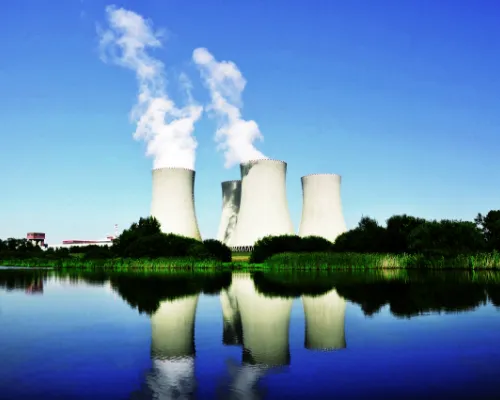
How the power generation industry uses portable exchange DI service to provide demineralized makeup water. Economics are discussed. Regional portable exchange deionization (PEDI) service companies provide external regeneration of exchange tanks or user-owned vessels. This service covers flows to several hundred GPM and effluent quality up to 18 megohm, low TOC polishing mixed beds. Power generation plants are finding advantages utilizing these service companies to regenerate their mixed bed DI polishers off- site, especially when RO units and/or other bulk ion removal systems are involved. Technical, economic and environmental issues will be discussed as well as the structure of a regional PEDI company.
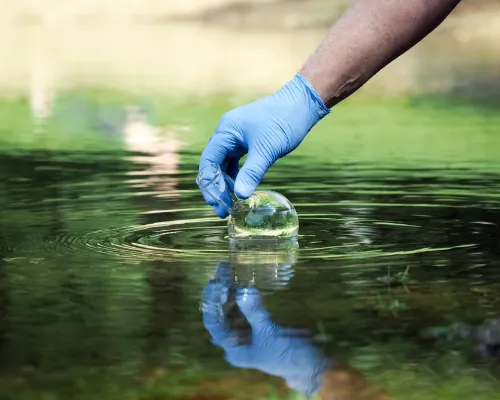
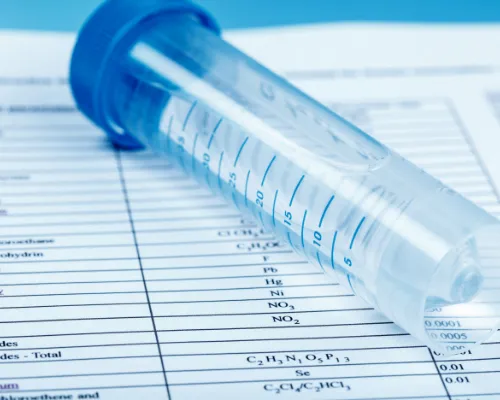
In the water treatment market, at some point, you are likely to have a client ask to have their water tested. The big question is: “Tested for what?” Depending on the client, the answer could be drastically different.
How does the concentration of background ions affect the removal of contaminants from water using ion exchange? What changes can be expected in treated water?
When approaching a rebed of an ion exchange unit it is important to determine if it is the best course of action, how you will remove the resin from the vessel and your plan to load the new resin. The need to rebed an ion exchange unit can be the result of problems with effluent quality, operating capacity and/or run lengths. These problems arise from changes in operating procedures, incoming water composition, resin loss or resin age.
Strong base anion resins (SBA), operated in the chloride form, can remove many contaminants from drinking water. These contaminants include arsenic V (also known as arsenate), nitrate, chromate, fluoride and uranium. The two types of strong base anion exchange resins commonly used today are Type 1 and Type 2 strongly basic anion exchange resins. Both resins can be used to remove the contaminants listed above.
The Boomsnub site in the state of Washington was listed as a Superfund site in 1995. The site consists of two parcels of land, which previously contained two unrelated businesses that contributed separately to contamination of soil and groundwater.
How to keep suspended solids from entering the ion exchange bed. How to properly backwash and clean a bed that may have become impacted by suspended solids accumulation.
A series of experiments were conducted to determine the uptake rates of tannic acid by styrenic strong-base Type-1, anion-exchange resins with a wide variety of moisture contents. Our goal was to determine the relationships between gel-phase moisture, total capacity, and physical structure for tannic acid uptake capacity and leakage. The results show a strong correlation between the increasing moisture content and improved exchange of chlorides for tannin. It was found that initial performance and performance stability as defined by the height of the transfer unit (HTU), for tannin/chloride exchange was dependent on the moisture content of the gel phase of the resin. The resins tested had gel-phase moisture contents that ranged from 40.7% to 80.8% (chloride form).
How to choose the correct softening resin for your application. Among the choices are 8% crosslinked, 10% crosslinked, gel, macroporous, fine mesh, coarse mesh, uniform particle size, and solventless.