Documentación del producto

Got spots? Here are some solutions.
Hardness minerals, calcium and magnesium, as well as some other dissolved ions, will leave spots on rinsed surfaces if the water is allowed to dry. Here’s how to prevent it from happening.
How Chelating Resins Behave
Chelating resins are gaining acceptance as the best available technology for the removal of transition and heavy metal cations from ground water and from plating rinse waters. These specialty ion exchange resins are capable of removing metals selectively in the presence of other ions such as calcium, magnesium and sodium. This paper describes the various types of chelating resins that are commercially available, discusses the conditions under which they will and will not work, and explores the input require-ments necessary to optimize a system design.
How Chelating Resins Behave
Chelating resins are gaining acceptance as the best available technology for the removal of transition and heavy metal cations from ground water and from plating rinse waters. These specialty ion exchange resins are capable of removing metals selectively in the presence of other ions such as calcium, magnesium and sodium. This paper describes the various types of chelating resins that are commercially available, discusses the conditions under which they will and will not work, and explores the input require-ments necessary to optimize a system design.
Ion Exchange: Niche Markets for the Common Water Softener
There are many uses a water conditioner can be put to beyond simply softening water. Some require more care and expertise because of potential health risks if not handled properly. Following is an overview on this concept.
Ion exchange’s impact on drinking water when removing nitrates
Frank Desilva responds to Water Technology readers’ questions.
Tapping Into High-Nitrate Groundwater Sources To Supplement Municipal Water Supplies
Cities throughout the Southwest have found that next-generation ion-exchange technologies provide a reliable, economical, ready-made way to leverage local groundwater resources without the expense of a hard-piped treatment facility or the problems of dealing with waste management.
Softeners: Increasing Salt Efficiency— Regenerant Contact Time, Concentration & Other Factors
A recent spate of regulations in a number of states has served notice to resin suppliers that current processes will need to be modified. A couple areas of concern are salt discharge and brine efficiency. The following article describes the role of regeneration and how proven techniques may make new regulations a moot point.
Protecting your mixed bed DI water with a softener
Peter Meyers responds to WC&P readers’ questions.
Uptake rate of tannic acid by strong-base gel-type anion resins
A series of experiments were conducted to determine the uptake rates of tannic acid by styrenic strong-base Type-1, anion-exchange resins with a wide variety of moisture contents. Our goal was to determine the relationships between gel-phase moisture, total capacity, and physical structure for tannic acid uptake capacity and leakage. The results show a strong correlation between the increasing moisture content and improved exchange of chlorides for tannin. It was found that initial performance and performance stability as defined by the height of the transfer unit (HTU), for tannin/chloride exchange was dependent on the moisture content of the gel phase of the resin. The resins tested had gel-phase moisture contents that ranged from 40.7% to 80.8% (chloride form).
Water Softening—Part 1 of 2: The Fundamental Theory
Water softening is an inherently efficient process. This is true for the service cycle, where sodium ions on the resin are exchanged for hardness ions in the water. And, unlike most chemical reactions, it’s true during the reverse exchange, or regeneration, where sodium ions in the brine are swapped for hardness ions on the resin. Few chemical processes are efficient in both directions. The reason for water softening efficiency is a phenomenon called selectivity reversal that’s caused by changes in the solution concentration when the ion exchange reaction involves ions of unequal valence. The principal of selectivity reversal underlies all ion exchange theory and is the science behind the art of softening water.
Water Softening—Part 2 of 2: The Fundamental Theory
In Part 1, we discussed aspects of ion selectivity as they relate to water softening, including selectivity coefficients, apparent selectivity and selectivity reversal. In Part 2, we take up the mathematical relationships of concentration, valence and capacity, which underlie the theory of water softening.
Waterborne Contaminants: Emerging Issues—Copper, Chloramines and Water Conditioners
Recently, a handful of portable exchange deionization (PEDI) operators in California were cited for excessive discharges of copper. How and why could this happen when the general use of the portable exchange tanks was treatment of potable water, not copper-containing wastewaters? Here’s an explanation and some suggestions.
What Should Be Included In A Drinking Water Test
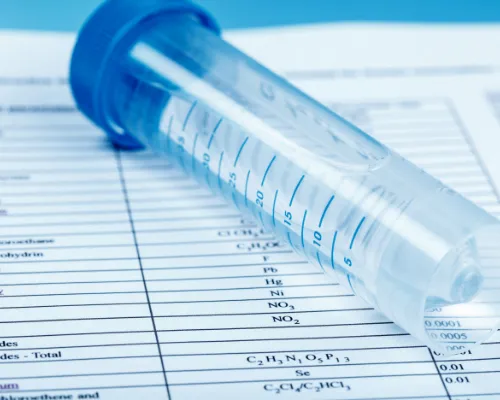
In the water treatment market, at some point, you are likely to have a client ask to have their water tested. The big question is: “Tested for what?” Depending on the client, the answer could be drastically different.
WQA Radio #192
Frank Desilva talks about the new ResinTech manufacturing facility in New Jersey, how he makes ion exchange a more interesting topic for conversations and sales presentations, and one of the positives he sees coming out of the pandemic.
Using Demineralization as a Water Saving Device
Recycling water using DI at an ammunition plant.
Acetaldehyde
Short Technical data sheet on acetaldehyde formation in type 2 anion resin (SBG2). Not sure who wrote it just going through the old tech files and picking ones I think might work.
Removal of dissolved iron, Manganese, Hydrogen sulfide, Arsenic from potable and non-potable water with product SIR-1300
SIR-1300 is REDOX Media which removes dissolved Fe, Mn, H2S, Arsenic from potable and non-potable water. This resin media does not require chemical regenerant. Regeneration is done with backwash water+ Air scour periodically
Arsenic Removal by Regenerable Anion Resin
How to remove arsenic from water using brine regenerable anion resin.
Ion Exchange Applications of Simulation Technology
Using performance prediction software to forecast ion exchange resin performance.
Being selective with sulfate
Discusses the selection and use of anion resin for removal of contaminants from water and the influence of sulfate levels.
Benefiting from a Lead/Lag Configuration
Using two IX units for meeting drinking water limits.
Boron Removal From Ultrapure Water By Boron Selective Ion Exchange
Boron Removal From Ultrapure Water By Boron SelectiveIon Exchange at Advanced Micro Devices
Brine Regeneration Considerations in Water Softeners
Factors affecting the efficiency and performance of brine regenerated water softeners
The Issue of pH Adjustment in Acid-Washed Carbons
How to avoid or accommodate pH variances in granular activated carbon.
The Care And Handling of Resin
How to store, load and dispose of ion exchange resin.
Cation Resin Color Can Make A Difference
Cation exchange resin is available in amber or dark colored beads. Which color is best for your application?
Softener resin and chlorine limitations
Predicting resin life and the effects of chlorine and chloramine disinfection
Chromate Removal at the Hanford Site (Part 2)
Update of chromate remediation project at the Hanford Site, Richland, WA
Chromate Removal at the Hanford Site
Case study of chromate removal at largest chromate groundwater remediation site in the USA. Presented at the International Water Conference. Coauthored by Dean Neshem Jr (CH2MHILL) and Francis DeSilva
Superfund site cleanup of chromate-contaminated groundwater
Article describing the use of SIR-700-HP for removal of hexavalent chromate from contaminated groundwater at a Superfund site in Vancouver, WA.
Iron Diagnosis and Removal
This presentation is a general overview of the types of iron in water and what to do to remove them. This is a general presentation.
Portable Exchange Deionization Basics
This presentation is designed for those regeneration DI resin in their facilities and how to do it.
pH Effects of Chloride Form Anion Resins
This is a review of how chloride form anion resin impacts the pH of water and why.
Application of Ion Exchange in Waste Water Treatment
Overview on using ion exchange resins for waste water or ground water remediation applications.
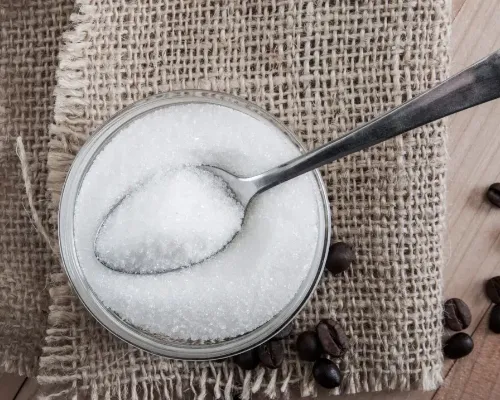
Application note on Ion exchange resins for sugar decolorization – Parag Deval
Selection of Ion exchange resins for sugar decolorization as per the color of sugar syrup